


r
...alternative option worthy of a test drive!
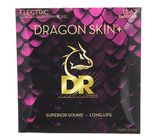
i've been using Elixirs 12-68 for ages on my [fairly uncommon, or rather rare] Ibanez MMM1 baritone neck-through sporting a 28" scale, which i tune B-B, and never really had a reason to look elsewhere – until i did.
it's the 3rd string, what would be the "G" on a non-baritone, standard-scale guitar, that pulled me to try this DR Strings Dragon Skin+ set: it's wound, here, not plain – which is my exact preference!
now mind the step, please: Elixirs don't come with wound-3rd string, unfortunately – so i've always been buying a single .024 wound string along with my Elixir set of choice, in order to have my ideal balance of tone and tension on my 28"-scaled heavier-than-stone baritone.
on my last trip to Thomann online deli, unfortunately, the Elixir Nanoweb .024w string wasn't available, which spoiled my shopping expedition, and turned open a door of opportunity to this DR Strings set.
sound-wise, set delivers the tone that serves my purpose for a baritone: detail-rich, plenty of attack, with all the high-end spark that i need – balanced throughout the full extension of my instrument.
at close inspection, quality looks flawless: no strange hiccups in the outer wrap, which is perfectly sealed at ball-end edge, too, and consistent finish onto any string.
as for surface feel, they're not exactly my cup of tea, though: that slippery sensation i get on Elixirs isn't here (which means a lot of guitarists will probably love these): there's more purchase, more friction, and (consequently) a louder mechanical noise from left-hand fingering, too.
then, peculiar to my guitar seriously long scale, the .062 6th string obviously tunes to a lower tension than the .068 i'm used to, and from this come kinda slower attack, while it's only fair to expect that a shorter scale isn't affected as much, probably.
where they've lost one star in my rating, though, it's on their overall length: 3rd and 4th strings end up significantly shorter on their respective tuning peg of a 3 + 3 headstock, which allows far too few turns around its shaft (and a lot less than the other strings); again, maybe a shorter scale guitar might be less affected by this... but a 6-inline headstock might reveal this shortage on the highest 1st 2nd string potentially, nonetheless.
0
0
Report