


Palmer Monicon M G2

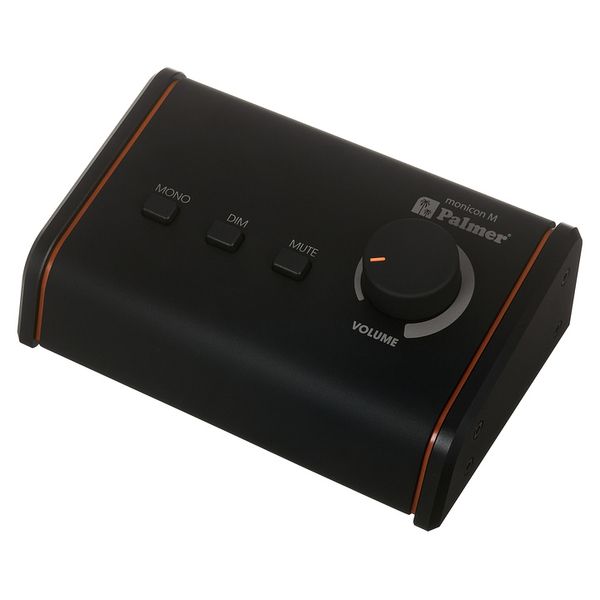
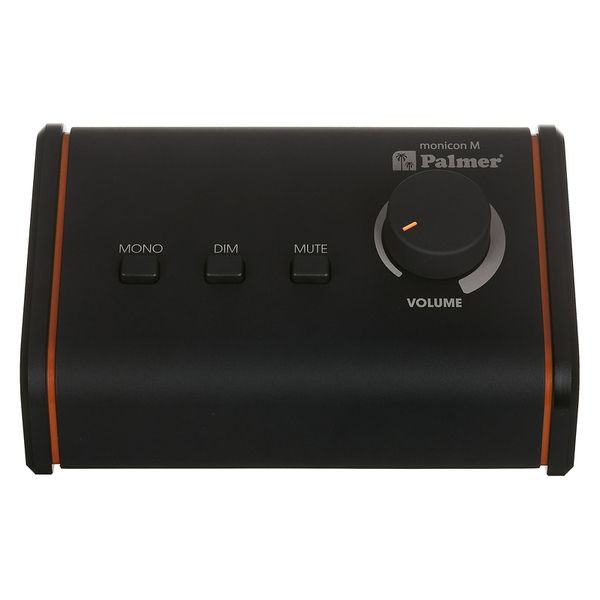
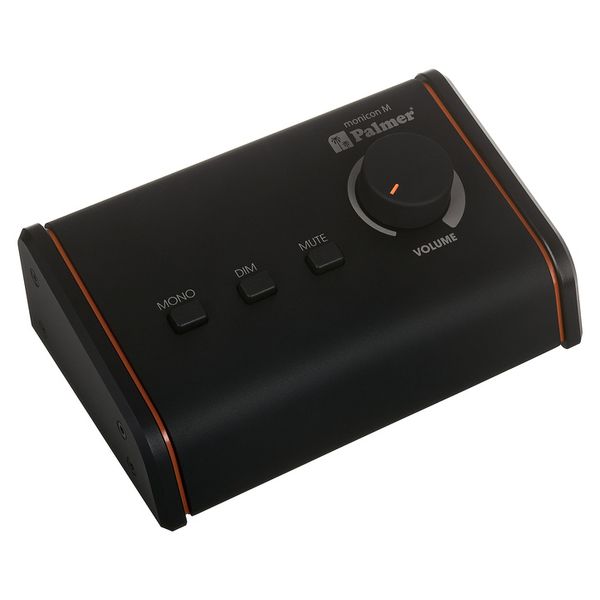
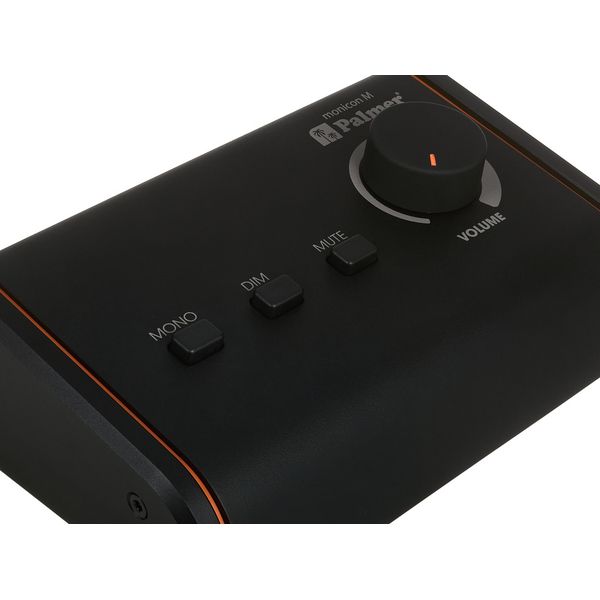
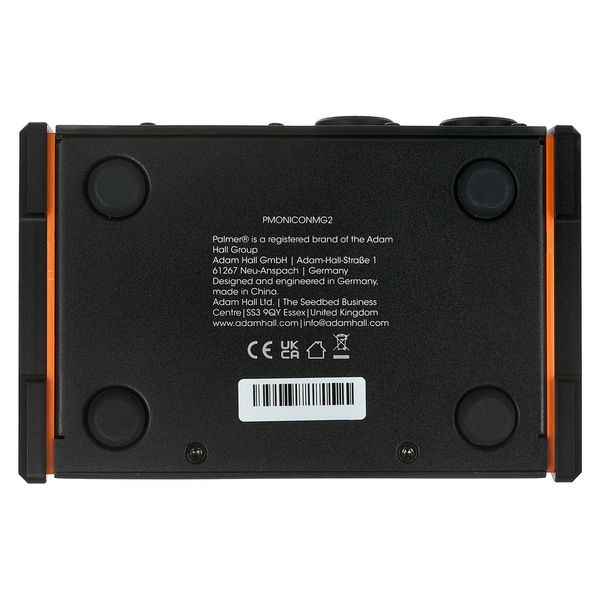


Passive Monitor Controller
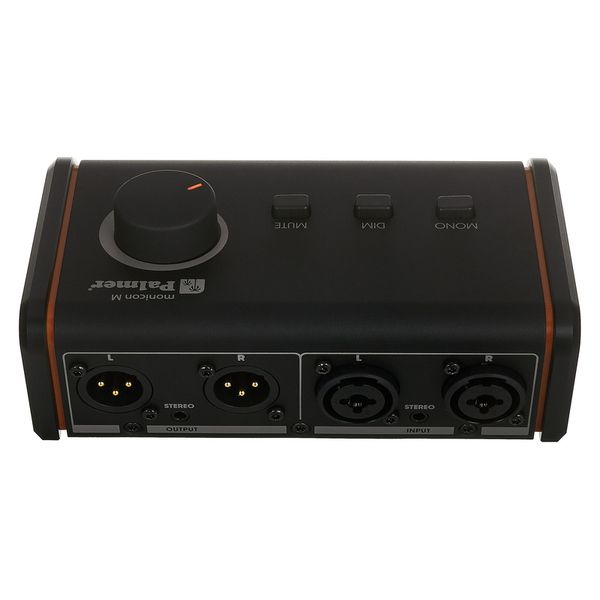
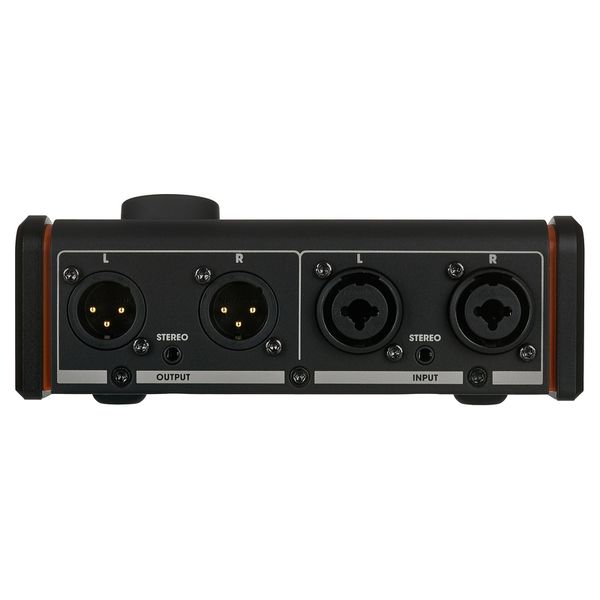
- Inputs: 1x balanced XLR/TRS combo socket (stereo), 1x 3.5mm stereo jack
- Outputs: 1x balanced XLR (stereo), 1x 3.5mm stereo jack
- Switchable mute
- Switchable mono summing
- Robust housing
- Dimensions (W x H x D): 160 x 62 x 106 mm
- Weight: 0.5 kg
- Colour: Black
-
Available since July 2025
-
Item number 622280
-
Sales Unit 1 piece(s)
-
Number Of Monitoring Outputs (Stereo) 1
-
Headphone connection 1
-
Talkback Function No
-
Built-in AD / DA converter No
-
Incl. Remote control No
-
Level Meter No
-
Number of 2 track inputs 0
-
Summing Function Yes
-
Surround No
-
Design Desktop
-
Dimensions 160 x 62 x 106
Passive monitor controller
The Monicon M G2 is a passive monitor controller from Palmer, presented here in its updated second-generation version, designed to cover the essential functions needed for straightforward monitor control. Its main features include monitor volume adjustment, signal muting, a DIM function with an attenuation of around 12dB, and the option to switch to a summed mono signal for monitoring, while its purely passive design means no power supply is required, allowing it to be connected and used immediately. For setups that call for additional facilities, such as a built-in headphone amplifier, separately controllable subwoofer, switchable inputs, or a level meter, Palmer also offers more comprehensive alternatives in the form of its larger Monicon L and XL models.

)
Balanced or unbalanced
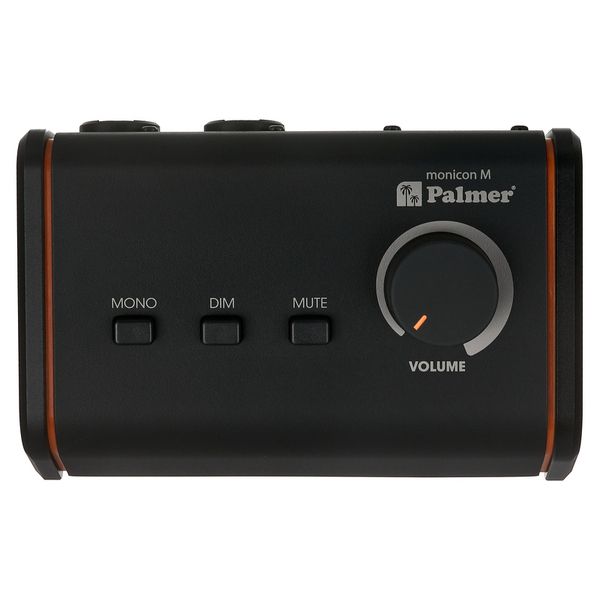
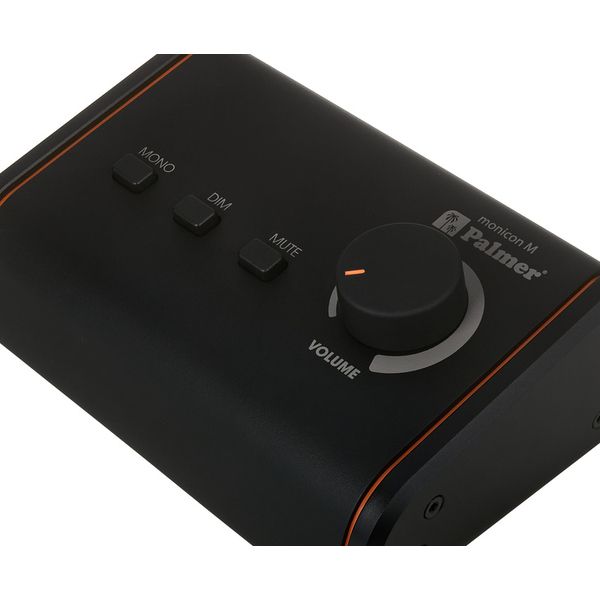
The Palmer Monicon M G2 comes in a sturdy black desktop housing that features a large volume control and three push-button switches, with orange markings to provide a clear indication of the current setting. It can be integrated into a monitoring setup using either balanced or unbalanced connections, with two XLR/jack combo sockets for balanced input and a 3.5mm stereo mini-jack for unbalanced operation; the outputs in turn feature both a pair of balanced XLR sockets and a 3.5mm stereo mini-jack. When working with unbalanced connections, it is advisable to keep cable runs as short as possible to minimise the risk of interference. The signal path remains linear from 20Hz to 20kHz with an input impedance of 20kOhm for balanced operation and 10kOhm for unbalanced operation, while the output impedance is 600 ohms.
)
Power supply strictly optional
The Palmer Monicon M G2 is aimed at users looking for straightforward analogue volume control combined with essential functions such as Mute, DIM, and Mono, making it well suited to home studios, media production, and content creation. The mono switch is particularly useful when checking mixes for mono compatibility, for example when considering playback through smartphones or simpler speaker systems. Technically, the Monicon M G2 is a passive attenuator with no active electronics, while its stereo channel balance remains consistent across a wide range of the control travel, helping to maintain precise monitoring levels. Even when monitoring at higher levels, the output signal remains unchanged, with no audible crosstalk or added noise, and the mechanical Mute, DIM, and Mono switches operate silently.
)
About Palmer
Palmer is one of seven brands belonging to Adam Hall GmbH from Neu-Anspach in Hessen, Germany, which was founded in 1975. Starting as a manufacturer of robust flight cases, Adam Hall GmbH has developed into a global manufacturer and distributor of event equipment. In addition to studio and PA equipment, the company also produces LED lighting systems, moving lights, cables, protective cable conduits, stands, and stage systems. The Palmer brand is known for marrying analogue circuitry with digital technology. In this way, new innovations are developed that meet the highest demands. The Palmer portfolio includes DI boxes, line isolators, speaker simulations, controllers, and studio monitors.
Convenience, quality, and safety
The compact Palmer Monicon M G2 takes up very little space on the desk while adding a convenient volume control that can be operated comfortably from the listening position. Compared to digital volume control via a mixer or DAW software, a passive monitor controller such as the Monicon M G2 offers the advantage of direct, tactile control via its large rotary knob, allowing levels to be adjusted quickly and intuitively. At the same time, the signal quality remains unchanged even when listening at low levels, while the controller's position in the signal path provides an additional layer of protection in the event of a computer fault, preventing uncontrolled signal spikes from being sent directly to the speakers.
In the spotlight
Digital vs analogue volume control
With digital volume control in DAWs or audio interfaces, the signal level is reduced mathematically by applying a scaling factor below 1, which in earlier 16-bit systems could result in audible losses because fewer quantisation levels were available at lower volumes. In modern 24 or 32-bit floating-point workflows, however, this is largely no longer a practical concern, as the available dynamic range is extremely wide, and signal resolution remains well preserved even at low listening levels. Analogue monitor controllers adjust the volume after D/A conversion, directly within the analogue signal path, providing computer-independent and often more intuitive control from the listening position. When properly implemented, they offer a reliable and practical monitoring solution, with their main advantages lying not necessarily in superior sound quality, but in straightforward operation and dependable everyday use.
)