


Palmer River Lahn

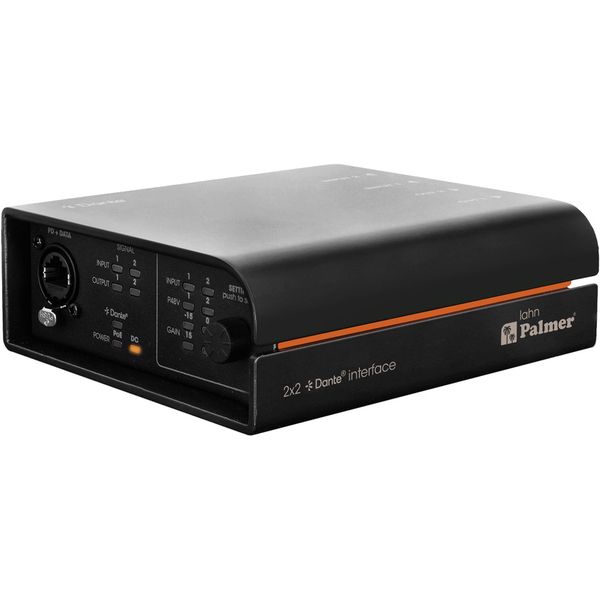
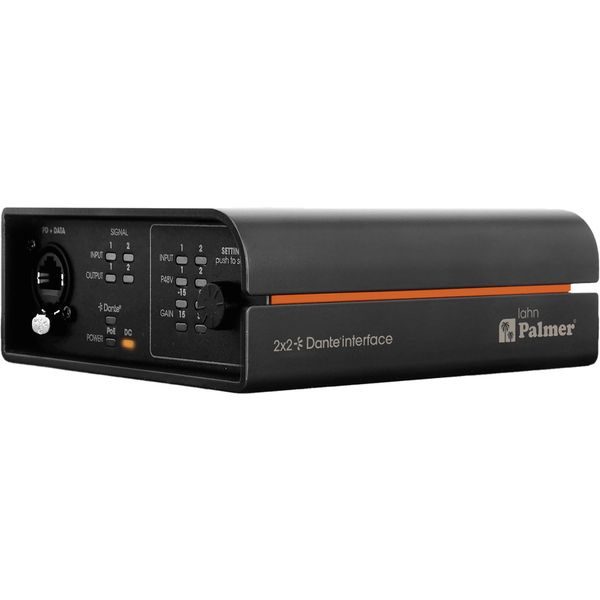
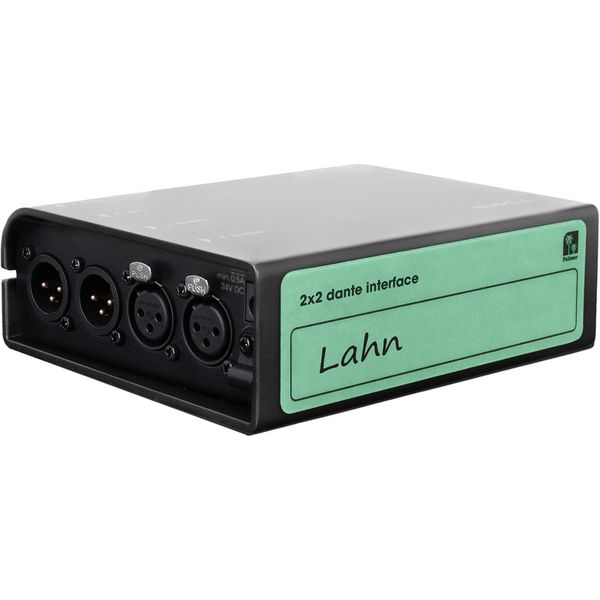


2 × 2 I/O Dante Interface
- Solid aluminium-steel housing
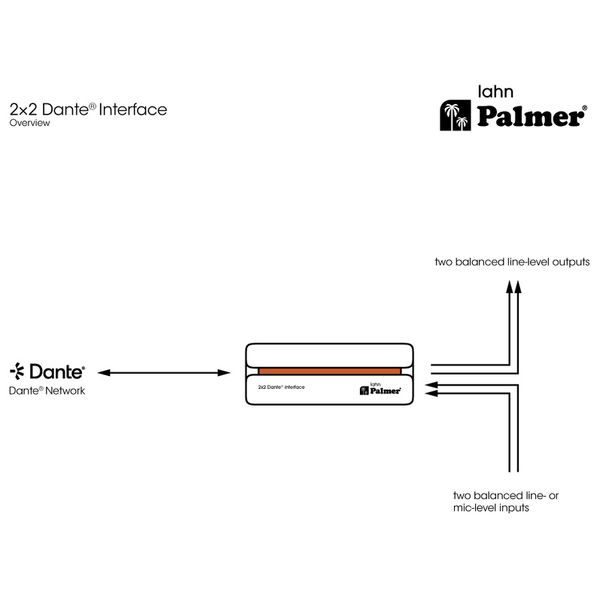
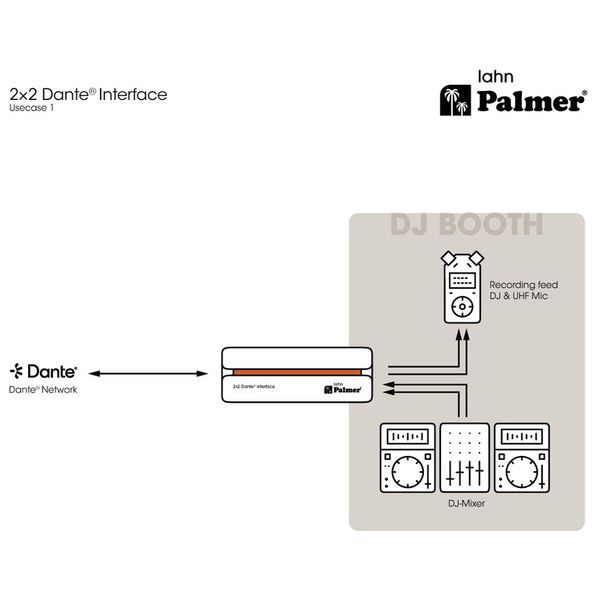
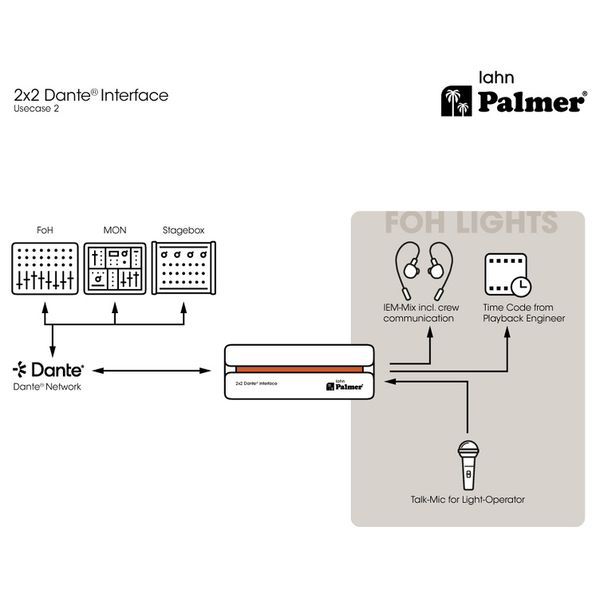
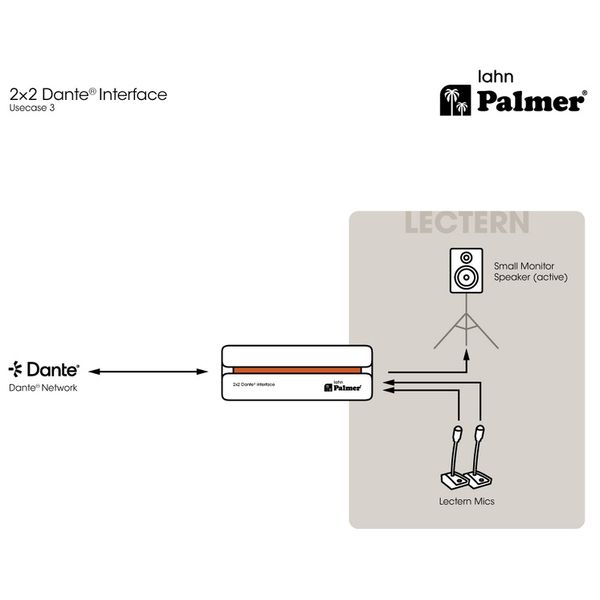
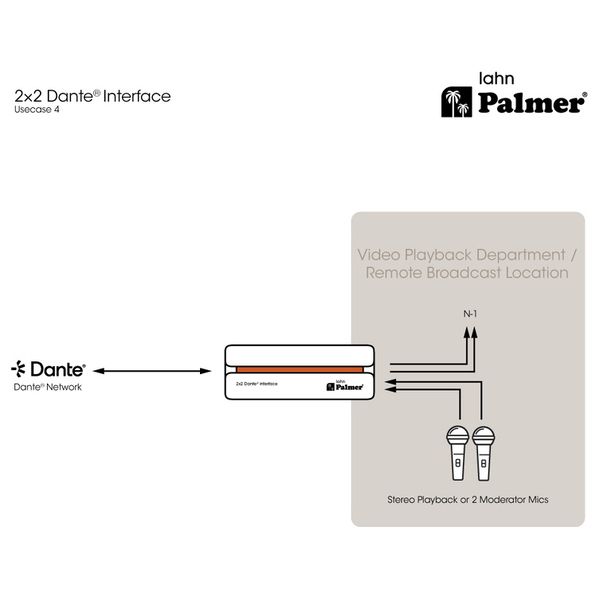
- For feeding two analogue microphone or line signals into Dante networks
- Conversion of Dante signals for mixing consoles, amplifiers, speakers, etc.
- Four-stage gain control and 48 V phantom power per channel
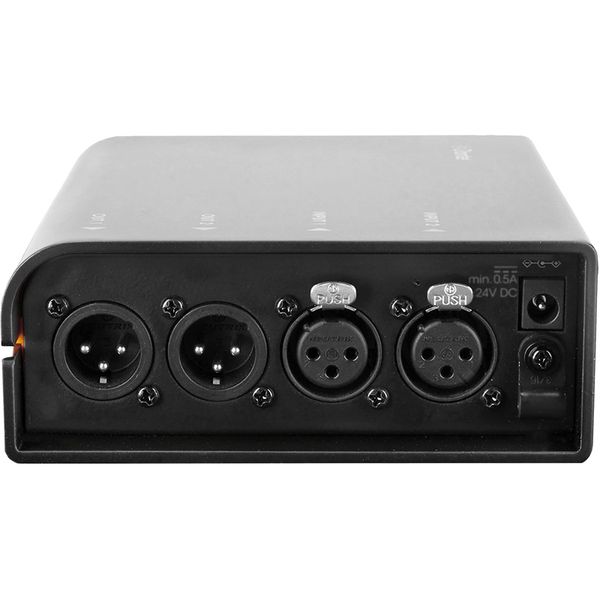
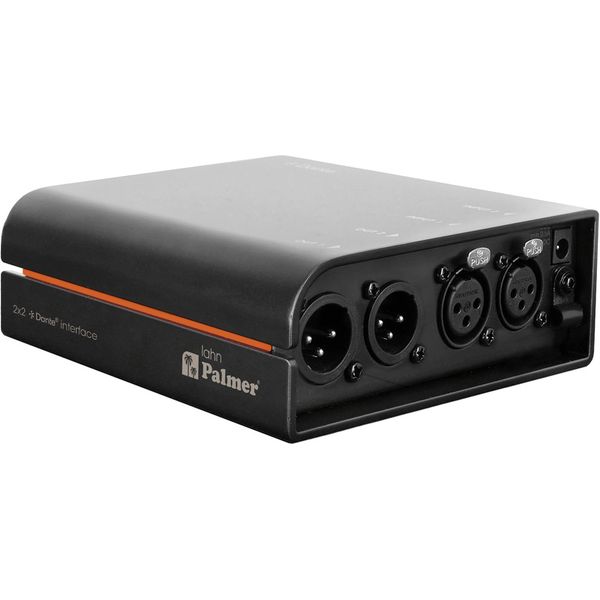
- Lockable XLR audio connections and etherCON network socket from Neutrik
- Two switchable XLR inputs
- Two balanced XLR line outputs with automatic muting if the Dante / AES67 signal is lost
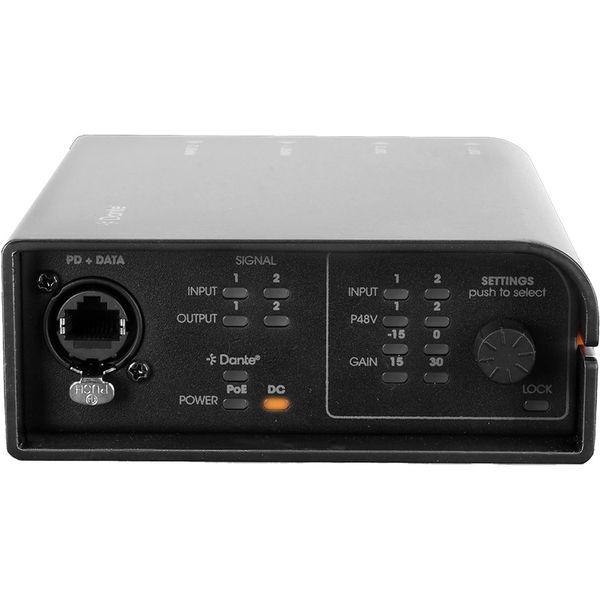
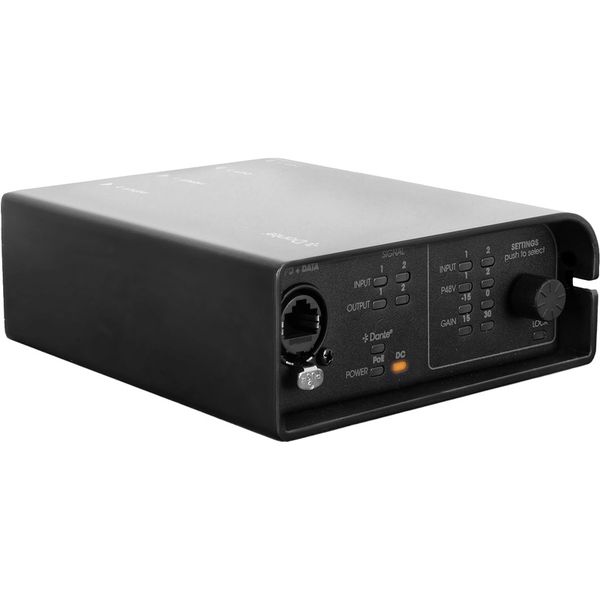
- Simple configuration on the front
- User lock, signal display for each channel
- Compatible with Dante Domain Manager and AES 67
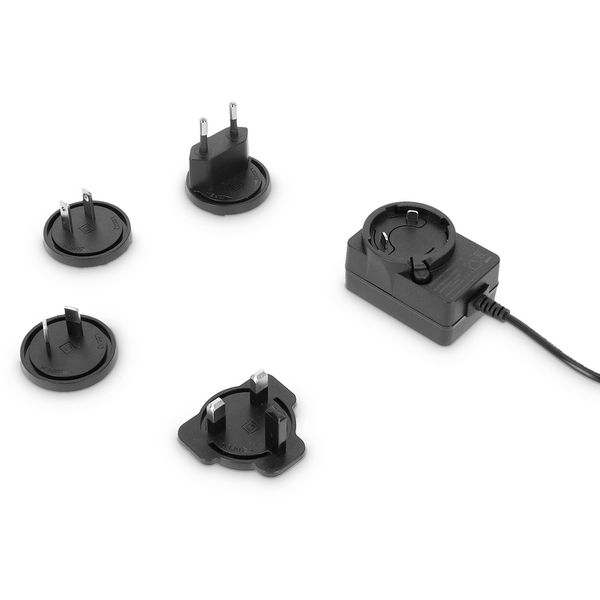
- Power supply via supplied power supply unit (24V DC / 500 mA) or PoE
- Dimensions (W x H x D): 128 × 50 × 140 mm (height with rubber feet)
- Weight: 0.96 kg
- Includes labelling plate (tour label), external power supply unit with interchangeable plugs
- Engineered in Germnay
-
Available since May 2025
-
Item number 618584
-
Sales Unit 1 piece(s)
-
Amount Of Channels 2
-
AD Conversion Yes
-
DA Conversion Yes
-
Max. Resolution Rate in Bits 32 bit
-
Max. Sampling Rate in kHz 48 kHz
-
S/PDIF Connecor No
-
AES/EBU Connector Yes
-
ADAT No
-
Word clock No
-
Number of analog inputs 2
-
Number of Analog Outputs 2
-
Headphone connection No
Compact 2-channel Dante interface
The Palmer River Lahn is an audio interface with two inputs and outputs designed for seamless connection to a Dante network, allowing Dante signals to be routed to mixing consoles, amplifiers, and speakers – or microphone and line signals to be fed into the network. Each channel offers four-stage gain control, switchable 48V phantom power, and a signal indicator. The River Lahn's compact yet robust aluminium and steel housing, locking XLR connectors, and a front-panel lockout function make the interface a reliable and secure choice for a wide range of on-the-road applications.
)
Easy editing via encoder
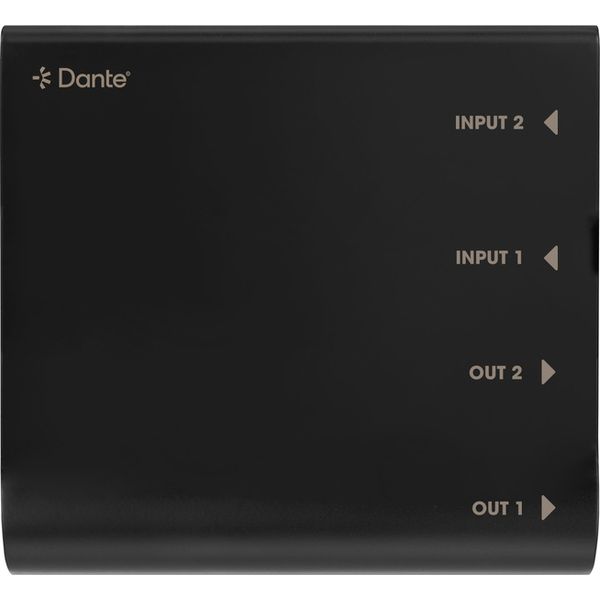
The bidirectional Dante interface, accessible via an etherCON socket on the left side of the Palmer River Lahn, can also provide power to the audio interface through PoE (Power over Ethernet). On the right-hand side, indicator LEDs display input and output signal strength, activated phantom power, and gain, while the LOCK light shows when the edit mode is protected against unauthorised changes. Channels are adjusted by pressing and turning the black encoder to select a channel and modify phantom power and gain values, with -15dB and 0dB suited for line level and 15dB and 30dB for microphone level; selections are confirmed with a brief press of the encoder.
)
Transforming digital networks
The Palmer River Lahn was designed for sound engineers working digitally who need to convert audio signals efficiently. It effectively enables speakers and mixing consoles to receive signals directly from a Dante network, and its robust yet compact design makes the device perfect for live events, while also proving effective in permanent installations, particularly for transmitting signals over long distances. With its four-stage gain control, input and output levels can be flexibly adjusted to accommodate a wide variety of signals, ensuring seamless sound reproduction and easy integration of microphone and line signals for any event where the sound's being mixed digitally.
)
About Palmer
Palmer is one of seven brands belonging to Adam Hall GmbH from Neu-Anspach in Hessen, Germany, which was founded in 1975. Starting as a manufacturer of robust flight cases, Adam Hall GmbH has developed into a global manufacturer and distributor of event equipment. In addition to studio and PA equipment, the company also produces LED lighting systems, moving lights, cables, protective cable conduits, stands, and stage systems. The Palmer brand is known for marrying analogue circuitry with digital technology. In this way, new innovations are developed that meet the highest demands. The Palmer portfolio includes DI boxes, line isolators, speaker simulations, controllers, and studio monitors.
Intelligent signal transmission
On the right side of the Palmer River Lahn, two XLR inputs and two XLR outputs handle balanced signal transmission, with the outputs automatically muted when no signal is present to prevent interference: Just beside the signal connectors sits the power supply input for use when power is not supplied via the Ethernet socket on the left. When connected to a Dante network via a Cat.5 Ethernet cable, the interface is automatically recognised by the Dante Controller software, allowing signals to be routed with just a few clicks; the software also allows users to edit device and channel names, while clearly displaying IP addresses and other information.