


Sennheiser E 902

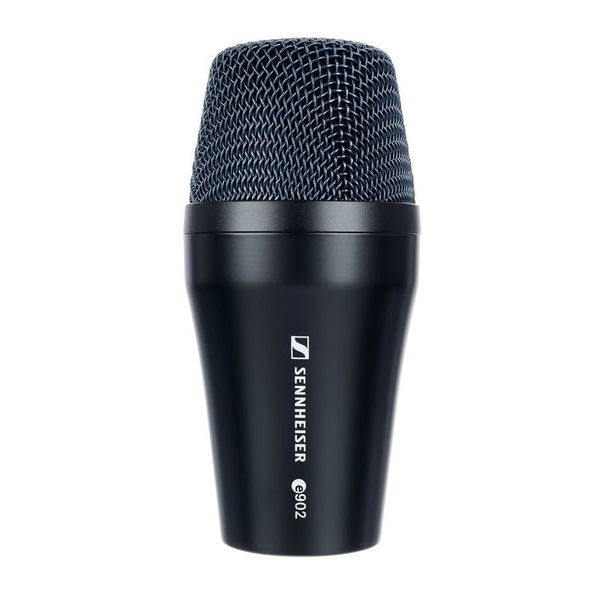
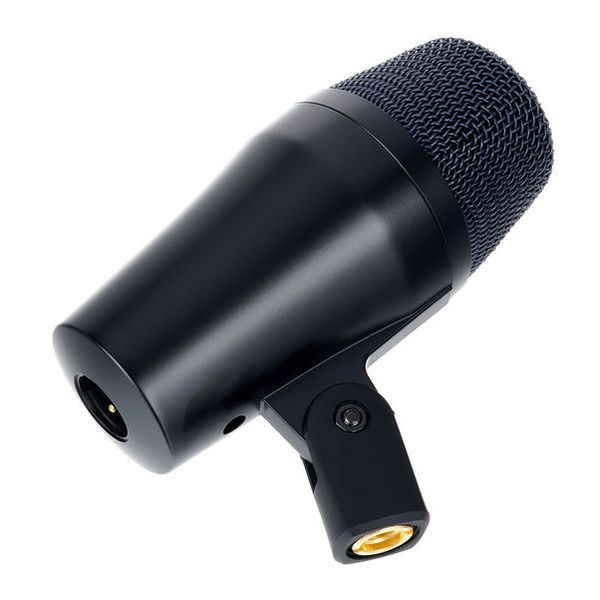
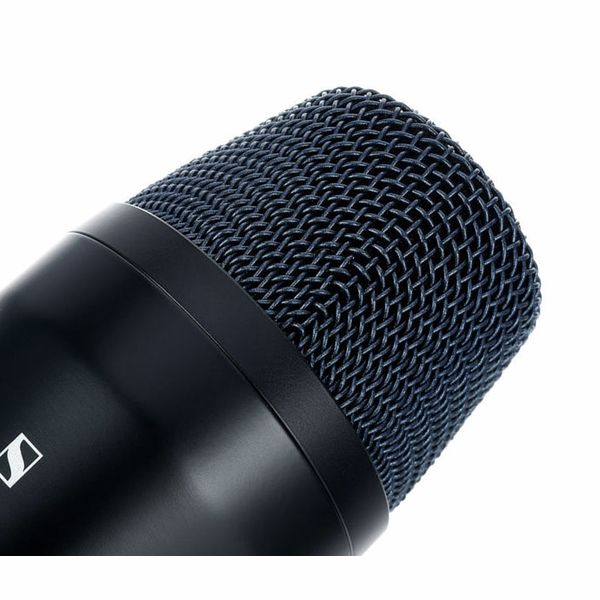
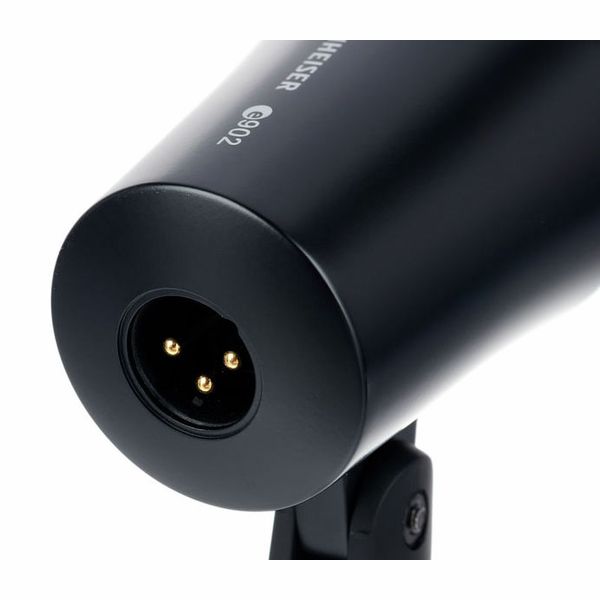
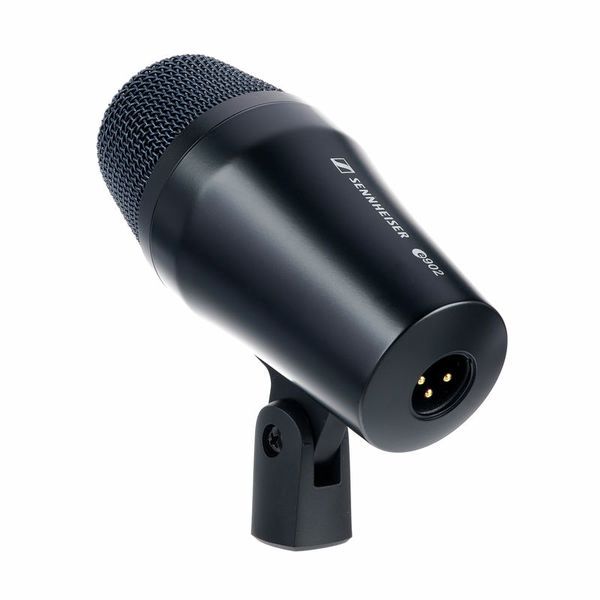
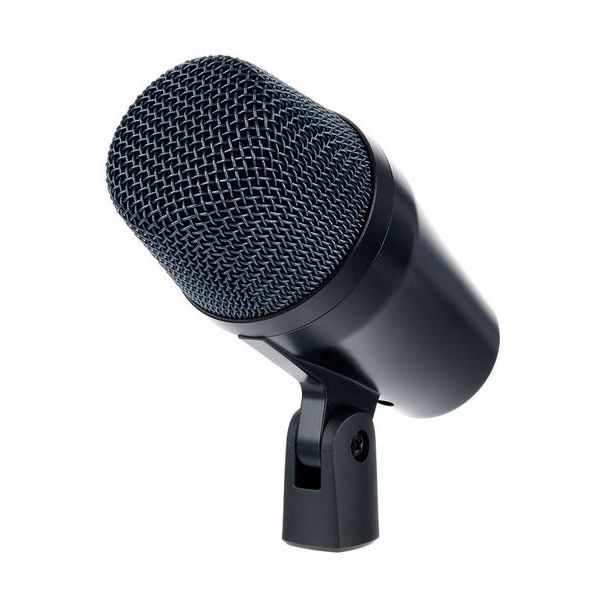
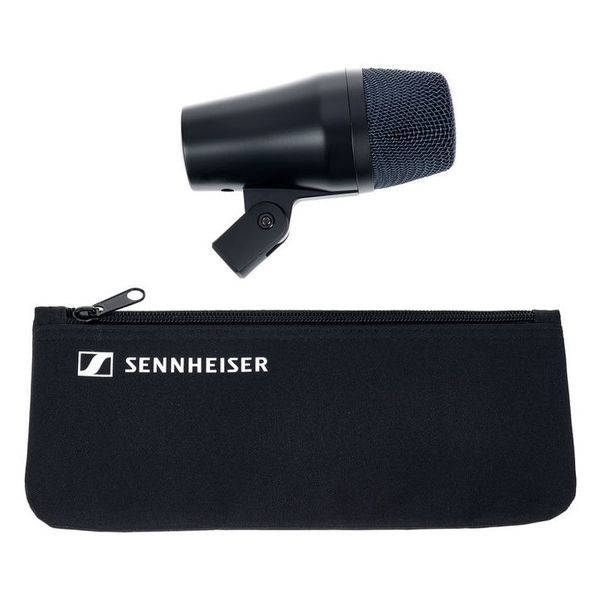


Dynamic bass drum microphone
- Specially for bass drums, tubas, and other bass instruments
- Polar pattern: Cardioid
- Frequency range: 20 - 18,000 Hz
- Impedance: 350 Ohm
- Integrated stand adapter
- Incl. bag
- Dimensions: 128.5 x 60 mm
- Weight: 440 g
-
Available since April 2005
-
Item number 179355
-
Sales Unit 1 piece(s)
-
Clip-On Microphone No
-
Condenser Microphone No
-
Polar Pattern Cardioid

Low-end specialist
The Sennheiser E 902 is designed to precisely capture low frequencies, reliably delivering rich and clear sound, with internal components that can effortlessly handle even the most powerful bass transients. Combining a robust housing with a tiltable microphone clamp, the E 902 can be positioned flexibly and remains securely attached, especially when used on a bass drum. Compared to other microphones designed for low-frequency sources, the E 902 also offers remarkably clear articulation in the higher frequencies, allowing the dynamic cardioid transducer to be positioned just as reliably in front of other instruments. For this reason, the E 902 has long been a popular choice in live venues and in recording studios. It comes complete with a handy case for transport.
)
Sturdy and versatile
With a frequency range of 20 to 18,000Hz – and an emphasis on bass and treble, with a slight reduction in the midrange – the Sennheiser E 902 easily meets the requirements of a whole host of musical applications. This tuning allows for a frequency response that results in a solid and balanced sound, while the sturdy metal housing provides the durability needed for use on bass drums and other powerful instruments. To help bring producers' ideas to life, the microphone, with its diameter of 60mm and a length of 128.5mm, can be flexibly positioned not only in front of but also inside drums: Its integrated stand adapter also allows for easy placement in front of other bass-heavy sources. The signal is transmitted to the mixing console via the three-pin XLR connector at the end of the shaft.
)
Full-bodied, crisp sound
Whether it's used on stage in a club or for recording in the studio, the Sennheiser E 902 will bring the rhythm section to the forefront with its powerful and defined sound. Event organisers will appreciate this durable and affordable microphone, with its robust metal housing that's been designed to withstand the demands of life on stage. For live concerts, the clamp attached directly to the mic's shaft ensures reliable positioning, keeping the E 902 securely in place even when the kick is hit hard – particularly reassuring for sound engineers who often have only a limited view of the drumkit from FOH. Operators of multi-purpose stages also benefit from the versatility of the capsule, which also performs convincingly in front of bass amplifiers, tubas, or double basses, adding clarity to both live performances and recording sessions with its bright high frequencies.
)
About Sennheiser
In June 1945, Prof. Fritz Sennheiser founded the Wennebostel Laboratory, which initially produced measuring equipment. Commissioned by Siemens in 1945, the young company developed the MD-1 microphone, which was launched in 1946. After the development of further microphones, the company was renamed Sennheiser Electronic in 1958. Two years later, Sennheiser introduced the MD 421 dynamic microphone, which is still in production today and still held in high esteem by many sound engineers. Further groundbreaking developments, such as the HD 414 headphones and the classic MD 441 microphone, hugely enhanced the company's international reputation, eventually making Sennheiser one of the leading manufacturers of microphone and headphone systems in the world.
Accurate miking
A standard three-pin XLR cable makes it quick and easy to use the Sennheiser E 902 to mike a bass drum. A compact bass drum stand is particularly useful for positioning the microphone inside the drum via the opening in the resonant head, allowing flexible placement depending on the desired sound. Positioning the E 902 closer to the batter head results in a more attack-oriented sound, although of course a small distance should be maintained so that the drum's head can move freely. Placing the microphone near the foot pedal emphasises the higher frequencies, while positioning it towards the edge of the shell produces a warmer character. When used in front of an electric bass amplifier, the centre of the speaker cone delivers more high frequencies, which can result in an effective balance between low-frequency pressure and clarity, especially with an amplifier standing on thick carpet.
This is what customers who viewed this product bought

Accessories & matching items
Compare options
-
Display Microphones for Bass Drum from AED 140 - AED 180
-
Go to product group Microphones for Bass Drum
-
Go to product group Microphones for Tuba, Euphonium ETC.
-
Go to product group Microphones for Saxophone
-
Go to product group Drum Microphones
-
Go to product group Instrument Microphones
-
Go to product group Microphones
-
Show manufacturer details for Sennheiser
-
Sennheiser Microphones at a glance