

To the page content

Phantom-powered FET OPTO Compressor

  • For ribbon and dynamic microphones
  • One-button operation
  • 25 dB gain (without compression)
  • Balanced XLR input/output
  • Circuit is operated with 48 V phantom power
  • Weight: 85 g
  • Available since February 2025
  • Item number 611281
  • Sales Unit 1 piece(s)
  • Compressor Yes
  • Gate No
  • Peak Limiter No
  • 2-Channel Unit No
  • Attack/Release Adjustable No
311 AED 74,79 €
The price in AED is a guideline price only
Since we ship from Germany, additional costs through taxes and customs may be incurred
In stock
1

Bonsai compressor

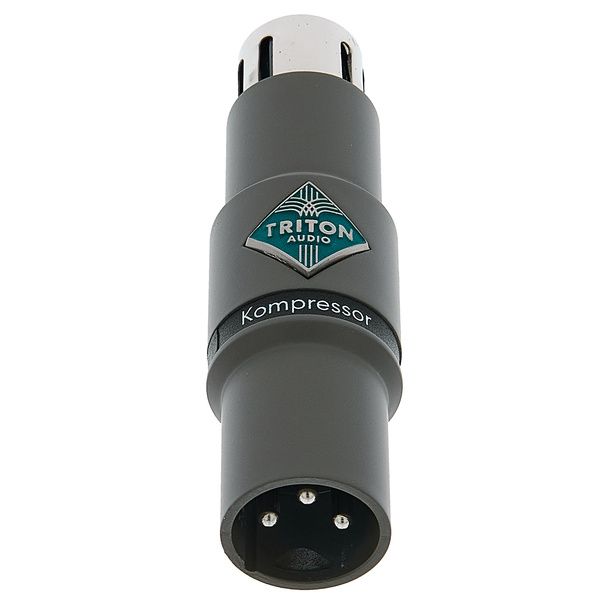
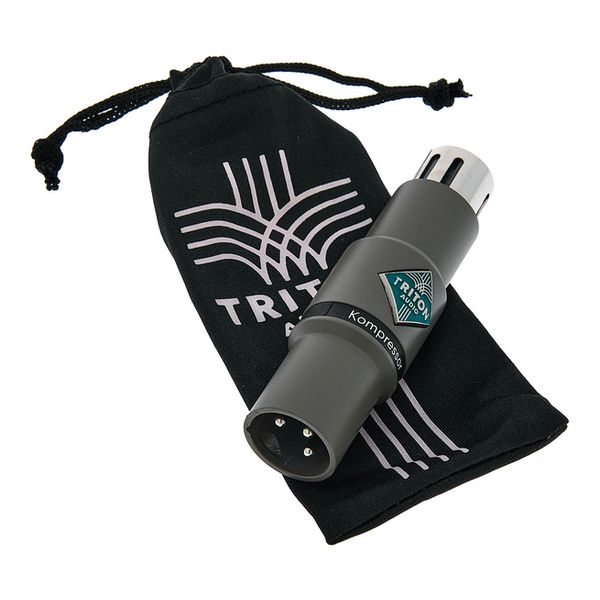
The Dutch manufacturer Triton Audio has built its reputation on compact, practical tools for studio and stage. Its best-known product to date is the FetHead, an inline microphone preamplifier housed in an XLR barrel. The Kompressor expands the range with an equally compact, easy-to-use compressor that fits between a microphone and a preamp, mixer, or recorder, providing transparent compression and up to 25dB of clean gain in the same familiar format. Handmade in the Netherlands to high manufacturing standards, it also remains competitively priced. While inline microphone boosters have become increasingly common, there are still very few alternatives to an inline compressor in this format.

TritonAudio Kompressor FET/OPTO phantom-powered compressor with storage pouch

Small footprint, real compression

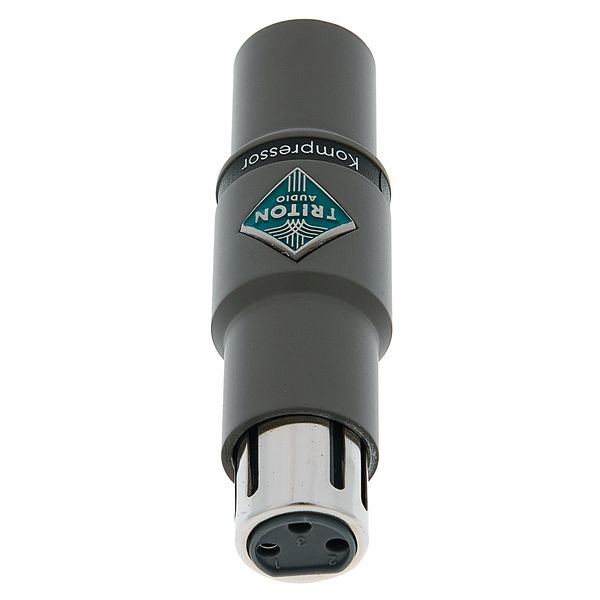
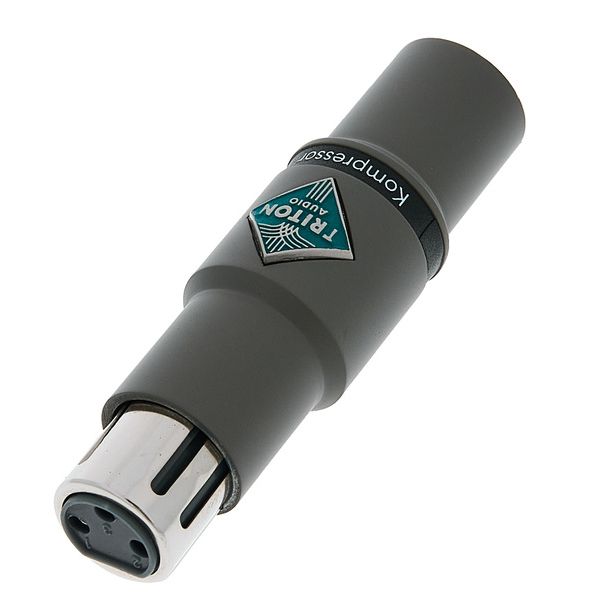
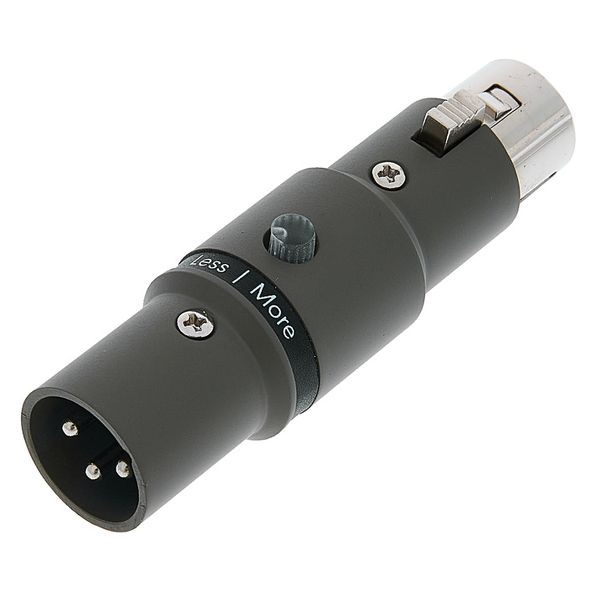
Barely larger than an XLR connector and weighing just 85g, the Triton Audio Kompressor slots between a microphone and its cable – or between the cable and any downstream preamp, mixer, or recording device – via two balanced XLR connectors. Powered entirely by phantom power drawn from the downstream device, it supplies up to 25dB of clean FET gain without passing phantom voltage on to the microphone, making it perfectly safe for passive ribbon microphones. Compression is generated by a JFET/opto circuit whose gain reduction naturally increases with the microphone's output level, while a single translucent side-mounted control adjusts the amount of compression and doubles as a simple LED signal indicator. A protective storage pouch is also included for transport and storage.

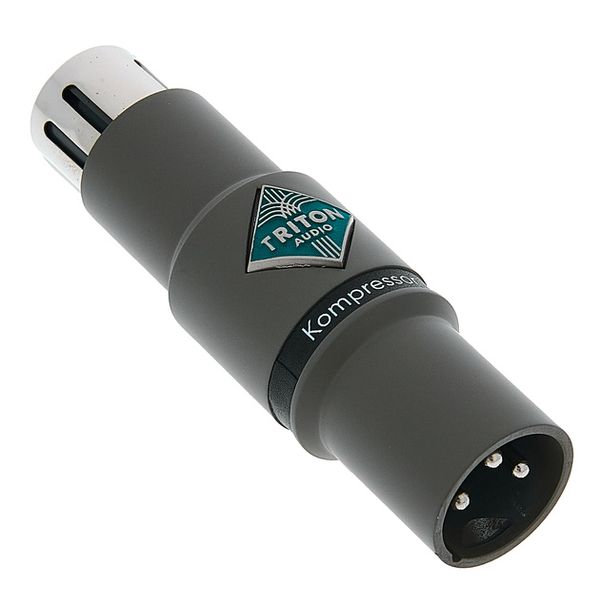
Close-up of the TritonAudio Kompressor FET/OPTO circuit
Mini tool for almost everyone

Single-knob operation leaves very little to misconfigure: The circuit responds automatically to the microphone's output level, while the control simply determines how much compression is applied. This makes the Kompressor from Triton Audio as practical for a first-time podcaster as for an experienced engineer integrating it into an established recording chain. Its compact format makes carrying several units in a kit bag entirely practical – a useful advantage for location recordists, broadcast engineers, and live sound operators who regularly work with multiple low-output microphones. At its price point, deploying several units throughout the same recording setup is a realistic option rather than a luxury.

TritonAudio logo on the Kompressor housing

About Triton Audio

The Dutch manufacturer TritonAudio is committed to producing pro audio equipment with great innovative potential and quality. Alongside a great selection of microphones, products range from in-line microphone amplifiers and phantom power stations to in-line attenuators and decoupling feet for near-field monitors – in other words, a whole array of helpful tools for any sound engineer. Incidentally, all units are assembled by hand in the Netherlands, and are often within a customer-friendly price range - the FetHead mini-amp being a prime example.

Between mic and preamp

The Triton Audio Kompressor makes it much easier to match different microphone types with downstream preamps and recording devices, whether in the studio, on location, or in live applications. The additional gain reduces the demands placed on the downstream microphone preamp, while analogue compression applied before AD conversion can produce noticeably cleaner recordings, particularly with more modest audio interfaces. How much compression is applied depends largely on the microphone's output level: Low-output dynamic mics such as the Shure SM7B, along with passive ribbon microphones, engage the circuit relatively gently, whereas higher-output microphones such as the Shure SM58 or Beta58 – and louder sound sources in general – will drive it harder. For these applications, Triton's optional AirHead variable attenuator provides a simple way to extend the Kompressor's versatility even further.

13 Customer ratings

4.5 / 5

handling

features

sound

quality

13 Reviews

r
good
reviewabc 22.04.2026
Bought this since it wasn't that much more expensive than the basic fethead model so decided to go for this compressor model .

clean noiseless gain like you'd expect from a fethead the "compressor" works surprisingly well and sounds pretty good I wouldn't use it for any real "professional" music recording or such but I'm sure a lot of people would find good use cases for it. Overall I'd say it's worth the little bit extra over the regular fethead
handling
features
sound
quality
0
0
Report

Report

R
Fantastisches Produkt
Roro_85 19.03.2026
Ein rauscharmer Vorverstärker mit integriertem, transparentem Kompressor in dieser Verarbeitungsqualität zu diesem Preis? Absolutes Schnäppchen.

Ich verwende ihn an einem Bändchenmikrofon, das die Außenseite der Bassdrum aufnimmt.

Zuvor hatte ich ein deutlich teureres Konkurrenzprodukt getestet, das jedoch starke Störgeräusche verursachte. Beim TritonAudio kann ich keinerlei Rauschen oder Störgeräusche feststellen. Der Kompressor lässt sich flexibel einstellen und macht genau das, was ich erhofft hatte: er begrenzt die Lautstärke.
handling
features
sound
quality
0
0
Report

Report

google translate de
Unfortunately there was an error. Please try again later.
B
Was man wissen sollte
Burnald 04.04.2025
An sich ein super Produkt. Es ist wie ein FetHead XLR Booster aber mit eingebautem Kompressor. Der optische Kompressor klingt gut und hilft dabei, Pegelspitzen VOR der A/D-Wandlung zu vermeiden (Aussteuerung bzgl. Headroom wird dadurch leichter kontrollierbar).

Aber was man wissen sollte:

- Die Kompression funktioniert mit unterschiedlichen Mikrofonen unterschiedlich gut bzw. ist unterschiedlich stark. Bei "lauten" Mikrofonen mit viel Pegel im Output hat man viel Möglichkeiten, bei "leisen" Mikrofonen mit wenig Pegel im Output, merkt man fast gar nichts von der Kompression (insbesondere dann, wenn man nicht gerade ins Mikro reinbrüllt).
Bei leisen Mikros macht sich die Kompression nämlich erst bei lautem Sprechen oder Singen bemerkbar, bei lauten Mikros ist die Kompression schon bei normalem oder gar leisem Sprechen hörbar.

- Es gibt nur einen einzigen Parameter, den man einstellen kann und das ist auch noch eine recht fummelige Angelegenheit. Der Drehregler ist ein winziger Stumpen einer Achse, die für meinen Geschmack nur schwergängig drehbar ist (und auch nicht viel Drehweg hat, naja, knapp 180°, aber schwer fühlbar). Im Prinzip geht also kaum eine kontrollierbare Zwischenposition zwischen "voll rein" oder "voll raus".
Ich wünschte, es gäbe ein optionales Rädchen oder eine Reglerkappe, die man im Bedarfsfall auf die Achse draufstecken könnte, um das Drehen des Rädchens etwas griffiger zu machen. Eine Skala fehlt auch. Ich weiß manchmal nur durch Herumdrehen, ob er gerade rein- oder rausgedreht ist (und wie weit).

Mit diesen Einschränkungen muss man eben leben, aber man muss auch bedenken, dass es diesen Optokompressor für gerade mal 25 € Aufpreis zur Fethead Version OHNE Kompressor gibt.
Und dass eine analoge Kompression VOR A/D-Wandlung hilft, ein paar Headroom-dB zu sparen (statt vorsichtshalber auf -24dB oder -18 dB kann man getrost auf -12dB aussteuern und kann immer noch sicher sein, dass es zu keiner Übersteuerung kommt).
Getestet mit folgenden Mikros: EV RE320, Fifine K688, Audio Technica AT 2040, Shure Beta 58A, SM58, Zoom ZDM1, Rode PodMic über Zoom UAC232 (und auch über Audient iD14).
handling
features
sound
quality
8
3
Report

Report

google translate fr
Unfortunately there was an error. Please try again later.
C4
Fethead amélioré
ChristianM 468 14.03.2025
J'avais déjà le fethead de la même marque pour booster mon SM7b. Ce kompressor est du même acabit mais avec en plus ce petit bouton rotatif supplémentaire bien pratique qui compresse le signal selon sa position : de less à more. Ce qui permet de gentiment traiter les écarts de de dynamique d'une prise de voix ou guitare acoustique. Ce n'est bien sûr, pas un bon vieux 1176 mais c'est assez surprenant et très pratique.
handling
features
sound
quality
4
0
Report

Report