


XVive PX-B - 3-Channel Snake

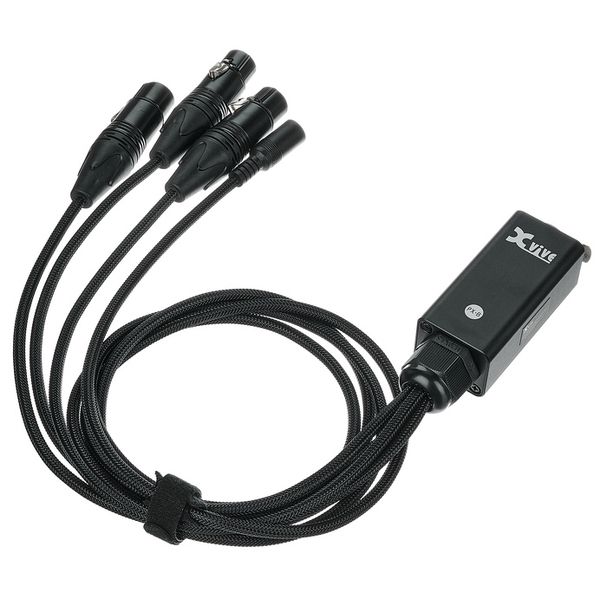
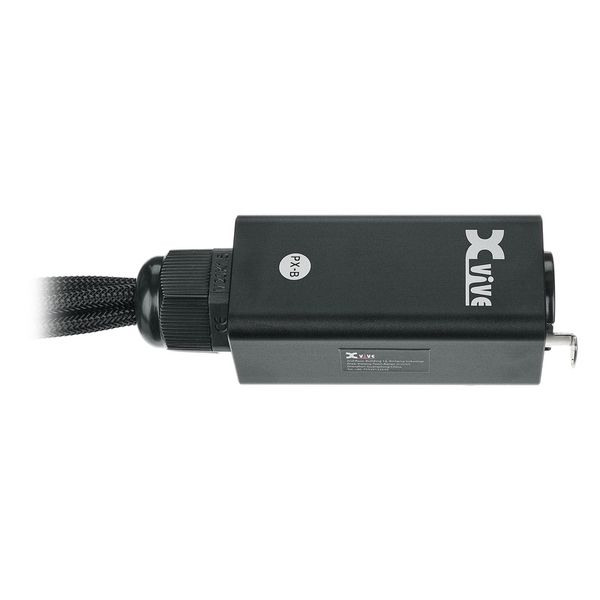
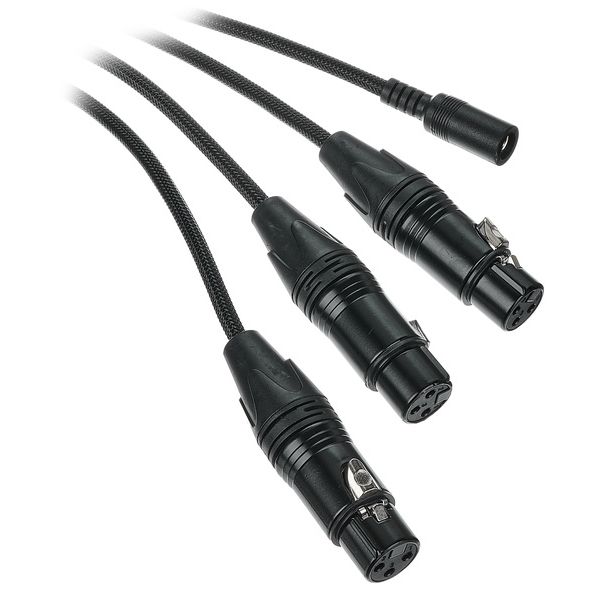
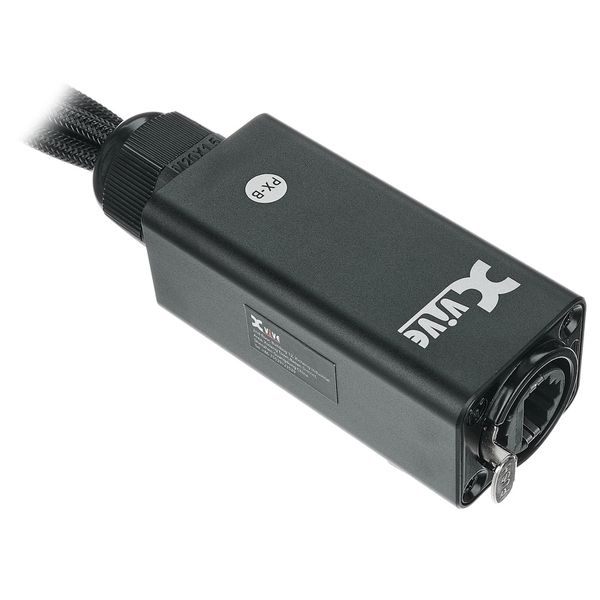


Compact interface for monitoring signals
- Audio snake for connecting to a mixer (and/or other audio devices) and the Xvive PX-A mixer
- 3 balanced female XLR plugs for connecting to the mixer
- 9 V DC input
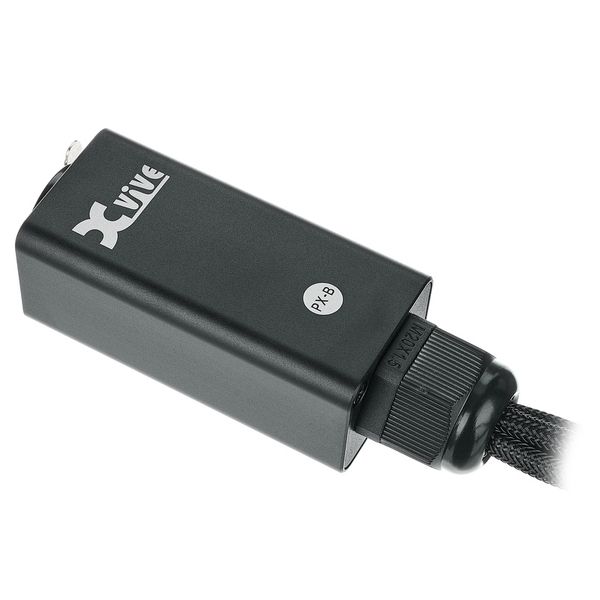
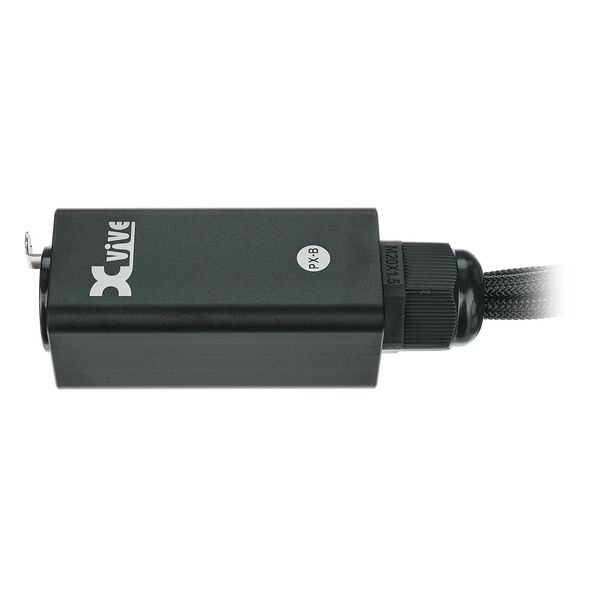
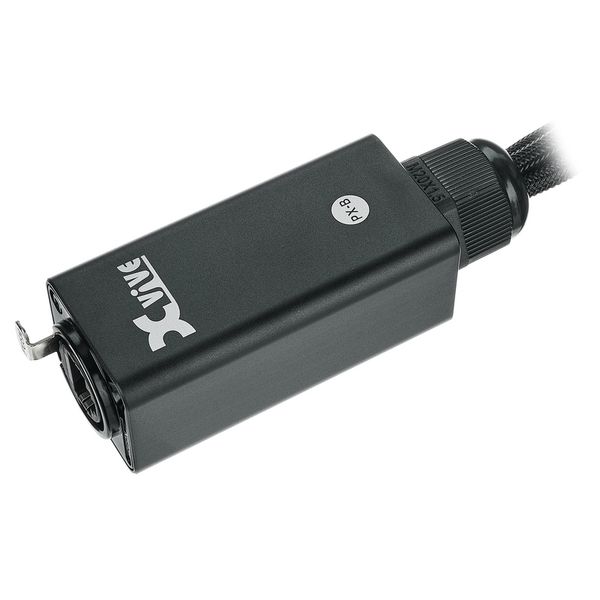
- Shock-resistant metal housing
- Compatible with Xvive PX-A mixer, EC25 Ethernet cable and PX-H hub
- 3x XLR input
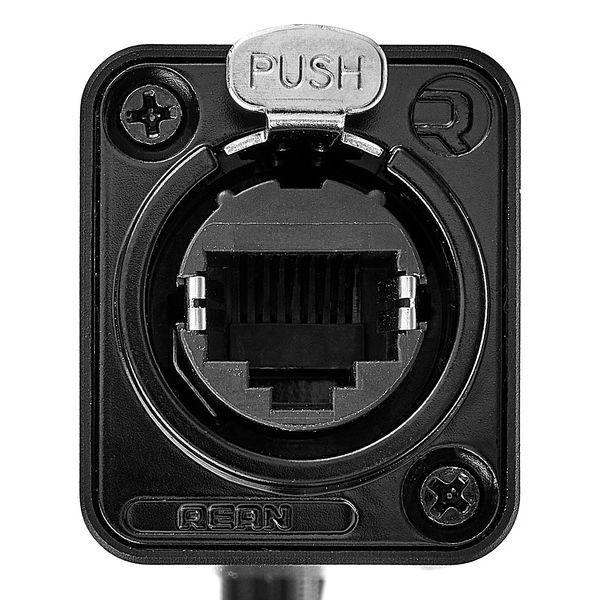
- Ethernet output
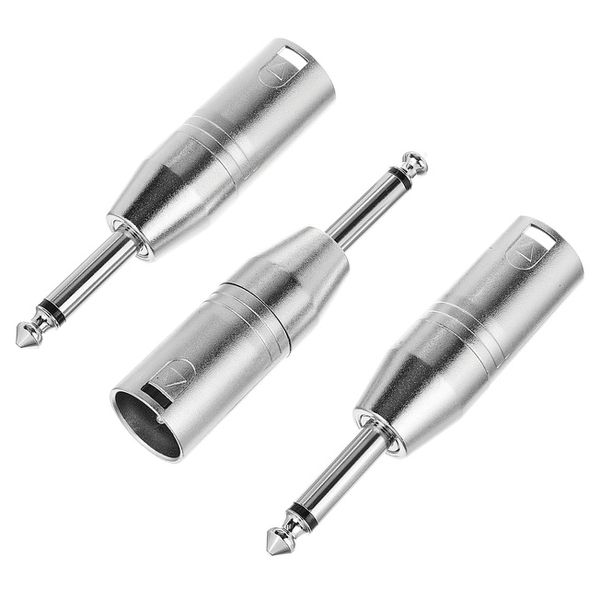
- Includes 3x XLR to 6.3 mm jack adapter
-
Available since June 2024
-
Item number 593242
-
Sales Unit 1 piece(s)
-
Design Breakout cable
-
Distribution Type 1in3
-
RJ45 connection female
-
Number of RJ45 connections 1
-
Signal Connection 3-pin XLR female
-
Number of Signal Connectors 3
-
Connector in RJ45 female
-
Connection out XLR 3-pin female

Compact three-channel monitoring interface
With the Xvive PX Mixer System, band members, vocalists and stage technicians can freely decide which elements of a three‑channel monitoring mix they want to hear. The Xvive PX‑B 3‑Channel Snake, available here as a standalone unit, functions as the central signal input and feed unit within this system. The PX‑B gathers up to three mono signals from a mixing console and feeds the mix via a single CAT cable to one or more Xvive PX‑A 3‑Channel Mixers. In addition, the PX‑B features a 9V DC input, allowing the connected PX‑A 3‑Channel Mixer to be powered directly via the CAT cable. Alternatively, the PX‑A can also be operated using batteries. In combination with optional distribution devices or the PX‑H 5‑Channel Hub, the system can be flexibly expanded and adapted to different stage and monitoring requirements.
)
Sound and power via CAT5
Within the Xvive PX Mixer System, the PX‑B 3‑Channel Snake acts as the central signal and power unit between the mixing console and a personal monitoring device. It accepts up to three mono signals from the mixer and routes these together via a CAT connection to a PX‑A 3‑Channel Mixer. Using the 9V DC input, power can optionally be supplied into the system so that the connected PX‑A is operated directly via the CAT cable. Thanks to the modular design of the system, multiple PX‑B 3‑Channel Snakes can be used in parallel – for example to supply different groups of musicians with their own monitor mixes, to distribute multiple input points across a stage, or to provide redundancy in professional touring setups.
)
A scalable monitoring solution
The Xvive PX Portable 3‑Channel Mixer System is a flexible, wired personal monitoring solution for anyone working on or around the stage. The Xvive PX‑B 3‑Channel Snake, offered here individually, provides the interface between the mixing console and personal monitor mixers. The PX‑B includes three XLR‑to‑jack adapters for connection to common mixer outputs. Complementary components include the PX‑A 3‑Channel Mixer as the personal monitoring unit and the optional PX‑H 5‑Channel Hub for signal distribution and system expansion. The affordability and robust build quality of all the individual parts means the Xvive PX system can be easily scaled – from simple individual setups to supplying multiple musicians during rehearsals or live recording sessions in the studio.
)
About Xvive
Xvive Audio officially entered the market in 2012 with its compact U2 wireless guitar system. Since then, the company has also been involved in the development of wireless microphone technology. Its catalogue also includes effects pedals, such as the Signature Series, which were developed in partnership with guitarist Thomas Blug. The products are designed by an American team, based in Pasadena, California, which is composed of musicians and engineers and draws on decades of professional experience. Its lead designer, Howard Davies, was previously employed at Electro Harmonix and Pigtronix, among others. Xvive Audio's goal is to create products that deliver exceptional sound and build quality, while remaining affordable for any musician.
For individual monitor mixes
Singers often need to readjust the balance between their voice and the other musicians in their monitor mix during a performance. A typical setup in this case would be vocals on the first input, guitars and keyboard mix on the second, and finally bass and drums on the third. For drummers, hearing the drums, bass, guitar, and vocals loud and clear is crucial in order to navigate the song structure, subtly interact with other band members and of course remain in lockstep with the bassist at all times. In this case, a typical setup might be bass on the first input, drums on the second input, and finally guitar and vocals on the third input.