
Arturia RackBrute 6U Noir

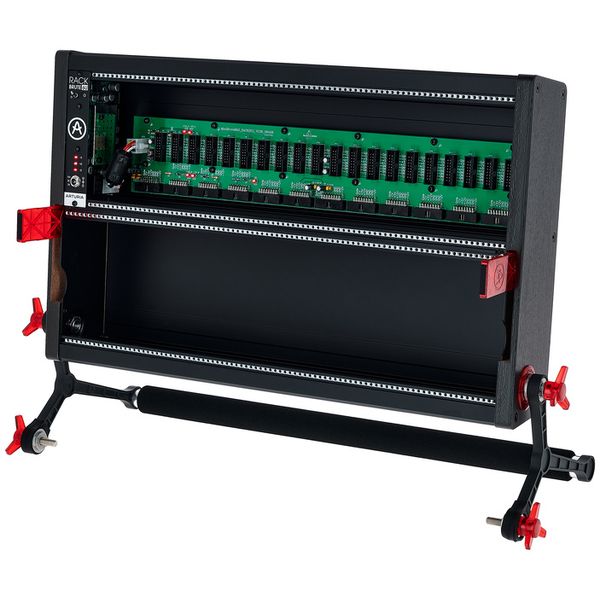
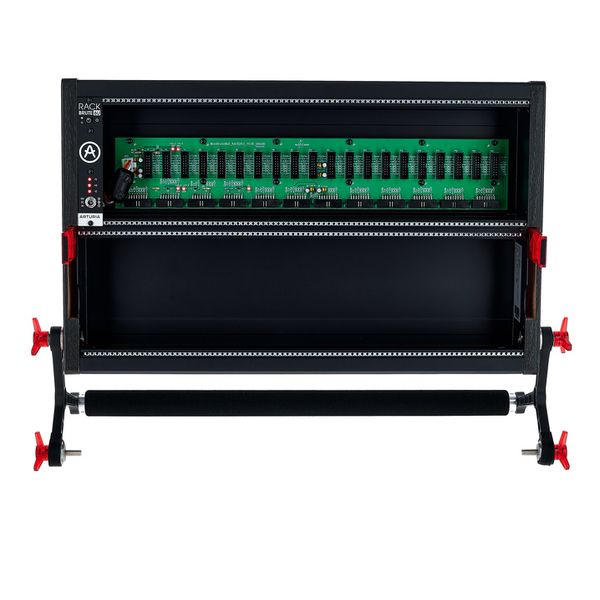
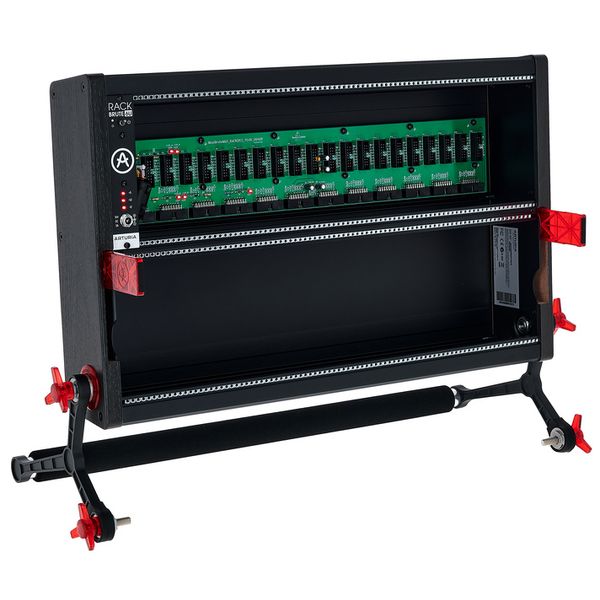
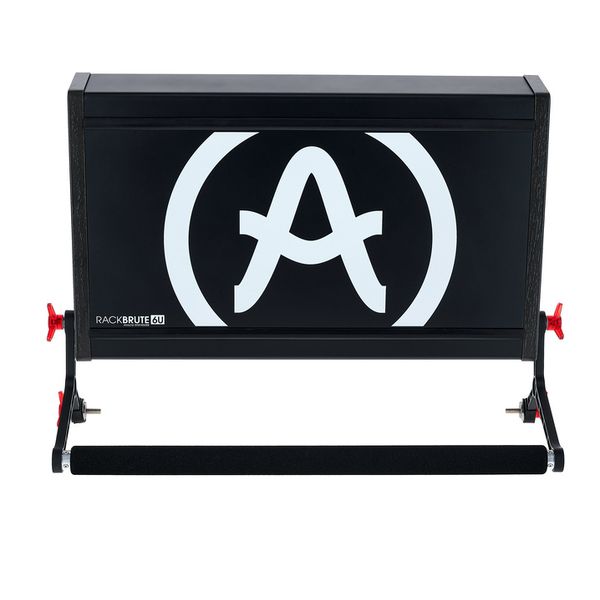


Eurorack Cabinet
- Black special edition
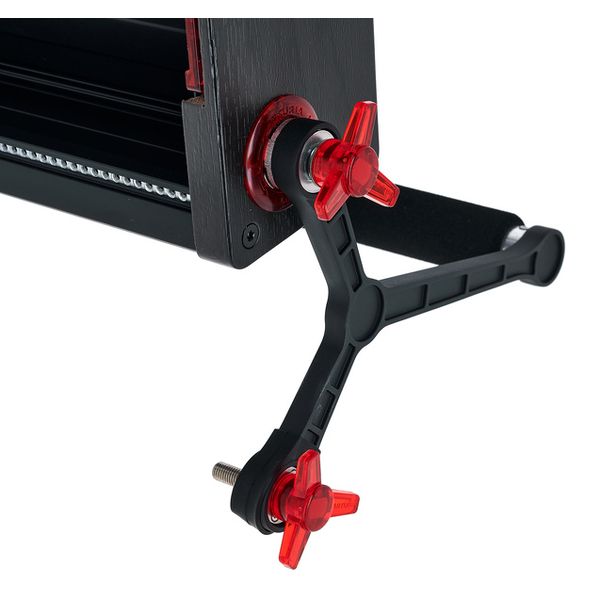
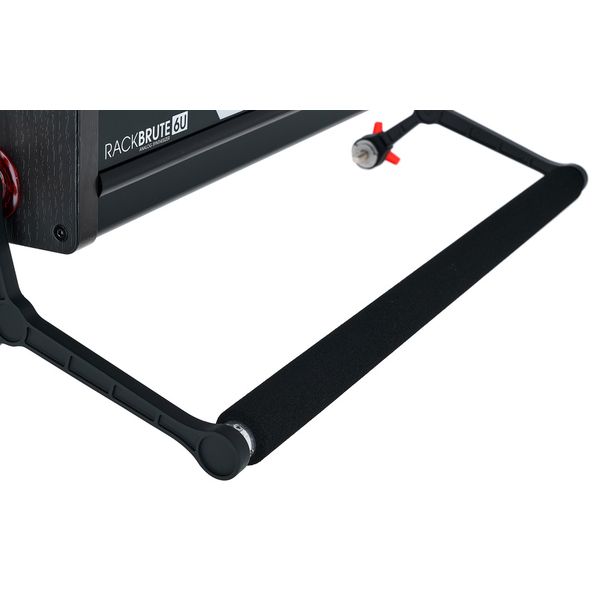
- Can be set up at various angles
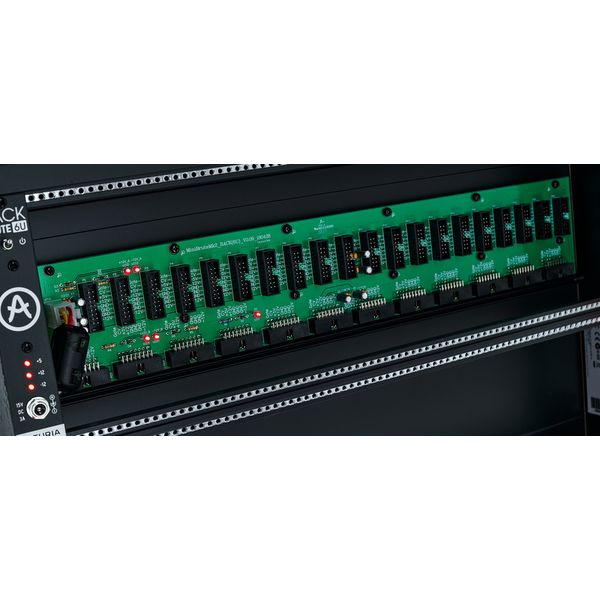
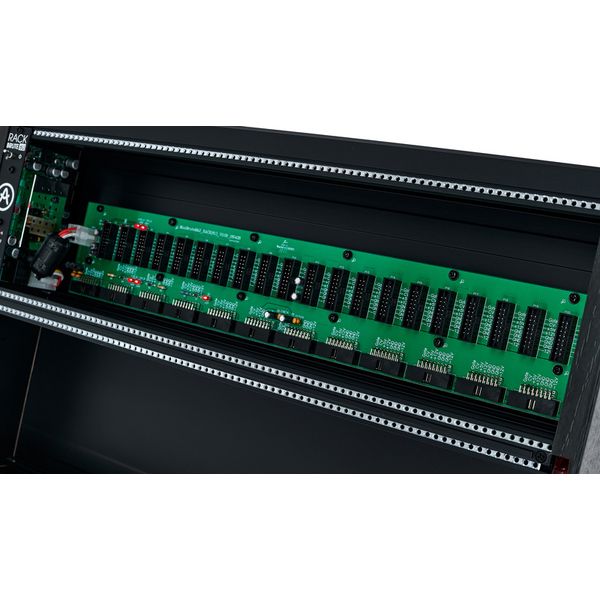
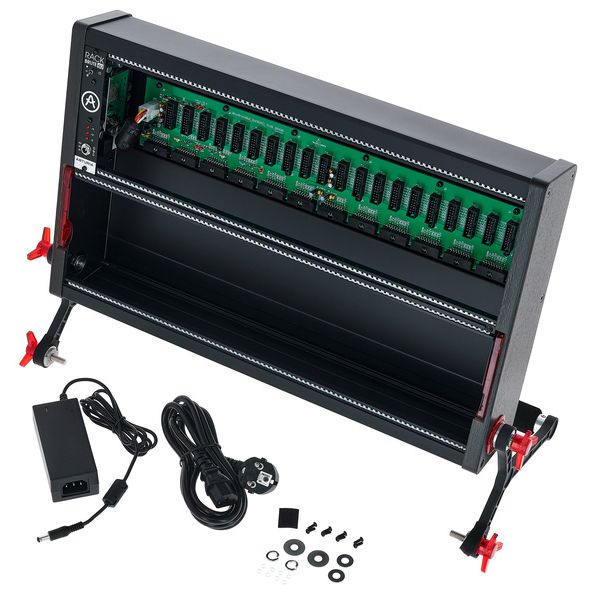
- Built-in bus board for up to 32 modules
- Arturia-Link compatible
- Aluminium case
- Wooden side panels
- Internal dimensions: 6 U / 176 HP
- External dimensions (W x H x D): 484 x 83 x 300 mm
- Weight: 3.76 kg
- Includes power supply +12 V / -12 V / +5 V
-
Available since November 2022
-
Item number 554402
-
Sales Unit 1 piece(s)
-
System Eurorack
-
Width 176 TE / HP
-
Height 6 U
-
Power Supply Yes
-
Formfactor Desktop
-
Power Supply Specifications +12V,-12V max. 1600mA, +5V max. 900mA

Expanding the MiniBrutes
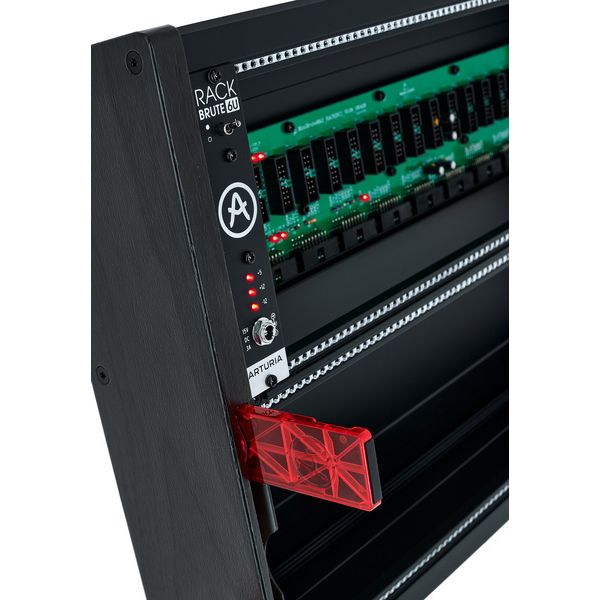
RackBrute 6U Noir is a two-row Horizontal Pitch Eurorack, here styled in Arturia's Noir Edition look. Designed to anchor and expand semi-modular systems in a secure, travel-friendly format, the RackBrute 6U bolts straight onto the MiniBrute 2 or MiniBrute 2S, letting sound designers configure their Eurorack to best suit their style. Thanks to the built-in patchbay and Arturia's link system, the modules slot right into the sound engine, while the frame's clever mounting system – with an adjustable tilt angle – keeps modules and patch cables secure when on the move. RackBrute 6U can also be linked with a second RackBrute 3U unit or used standalone, in which case the rear support bar doubles as a carry handle for safe transport.

)
Up to 32 modules
RackBrute 6U provides two rows totalling 176HP (approximately 2 x 47cm), 88HP in the lower row, and 83HP in the upper row, with 5HP reserved by the power supply module. This offers substantial space for assembling a comprehensive modular system. The bus board offers 32 power connectors and supplies up to 1600mA on the ±12V rails and 800mA on 5V, delivering ample current for demanding Eurorack configurations. Module depth varies between rows: The upper row accommodates skiff-friendly modules with approximately 53mm clearance due to the bus board, while the lower row allows the full 75mm. Power status LEDs indicate bus voltages for straightforward system monitoring.
)
More for the Mini
RackBrute 6U was designed primarily for owners of the MiniBrute 2 and 2S, as these synths feature a patch bay with 48 inputs and outputs for audio, CV, and gate signals. As such, their internal sound engines can be expanded with modules from the endless Eurorack universe, tailored to any creative idea. Digital oscillators, granular samplers, extra filters and modulation sources, effects, or more esoteric modules integrate directly into the signal path and can be patched straight into MiniBrute's keyboard or sequencer. Extra envelopes, LFOs, or CV sequencers allow deeper control over pitch, timbre, and dynamics. As modular systems evolve, practical tools such as multiples, attenuators, and signal processors quickly become essential, making full use of the RackBrute 6U's generous dimensions. For simpler setups, the RackBrute 3U frame will often do the job.
)
About Arturia
Arturia's success story began with software emulations of well-known analogue synthesizers such as the Moog Minimoog, Sequential Prophet-5, and Oberheim SEM. The popular software instruments included in the V Collection are still flagship products of the French developer today. Over time, Arturia has gradually expanded its range and now also offers a host of hardware devices, ranging from synthesizers and keyboard controllers to sequencers. Since then, the former software developer has thus also become a household name in the world of analogue synthesizers and other equipment.
A "Brutal" sonic spectrum
Some Eurorack modules quickly become essential for unlocking the MiniBrute's full potential. Additional oscillators or voice modules can dramatically broaden the sonic palette beyond the internal sound engine, introducing synthesis approaches such as wavetable, FM, or physical modelling techniques. Expanded modulation sources (including extra envelopes, LFOs, or CV sequencers) allow deeper control over pitch, timbre, and rhythmic movement. As systems grow, mixer and processing modules help combine multiple signal paths before routing them back into the the MiniBrute, while dedicated utility modules assist with signal routing, scaling, and patch organisation for managing complex setups. In practice, these seemingly small modules often fill a RackBrute faster than expected, reflecting the evolving nature of modular synthesis.