


Erica Synths Steampipe

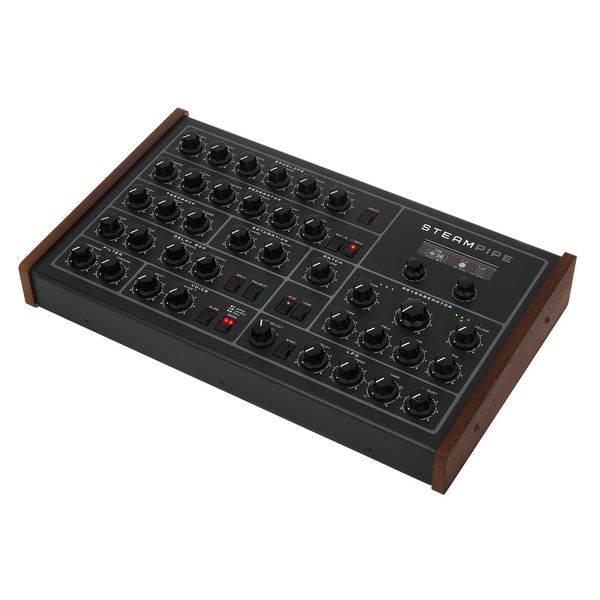
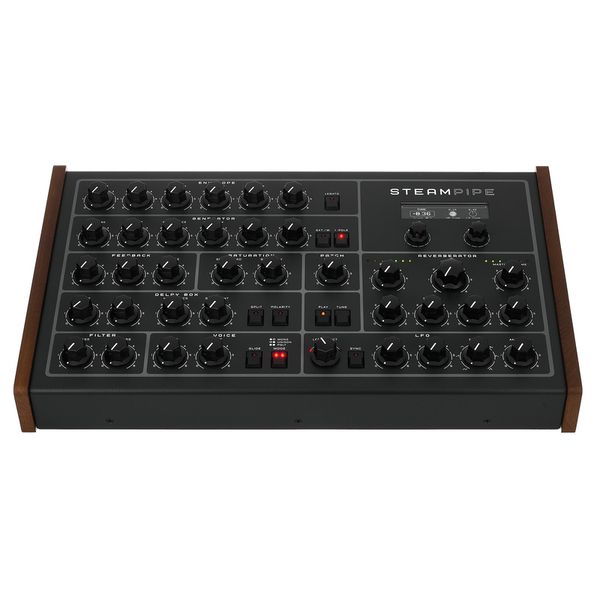
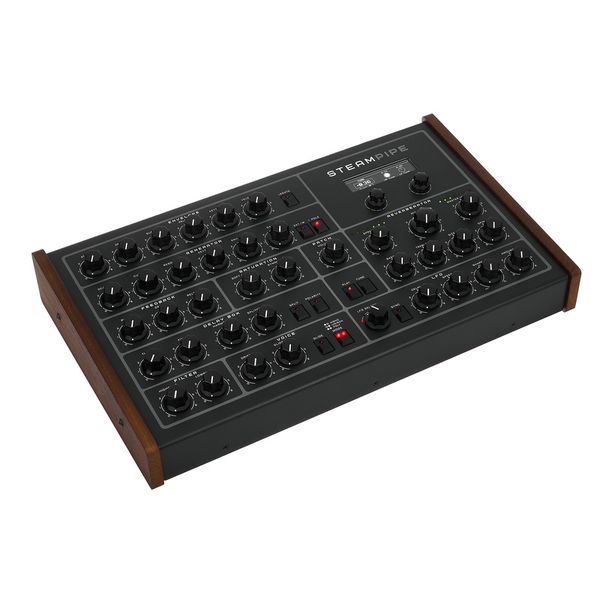



Desktop Synthesizer
- Physical Modelling Desktop Synthesizer developed in collaboration with 112dB.com
- 8-voice polyphonic
- Physical modelling engine with 32 adjustable parameters
- Five assignable LFOs with delay and sync
- Modulation matrix with MIDI controller-specific configurations
- 64 factory presets
- 192 user presets
- Preset export and import via USB
- All parameters can be controlled via MIDI CC
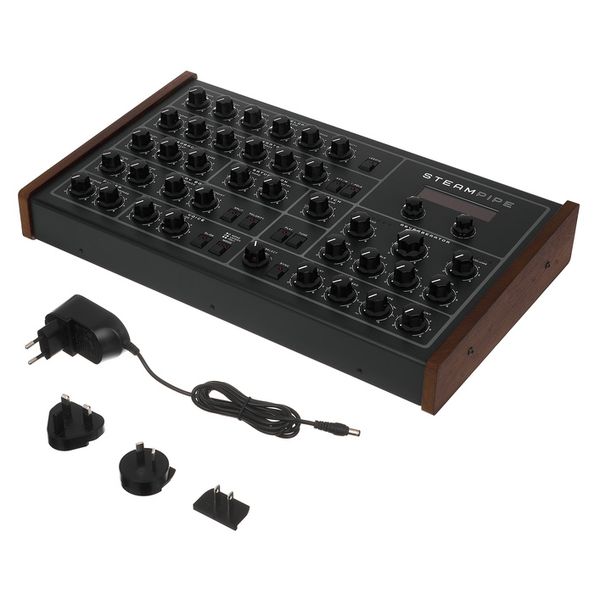
- Including external power supply 12V DC
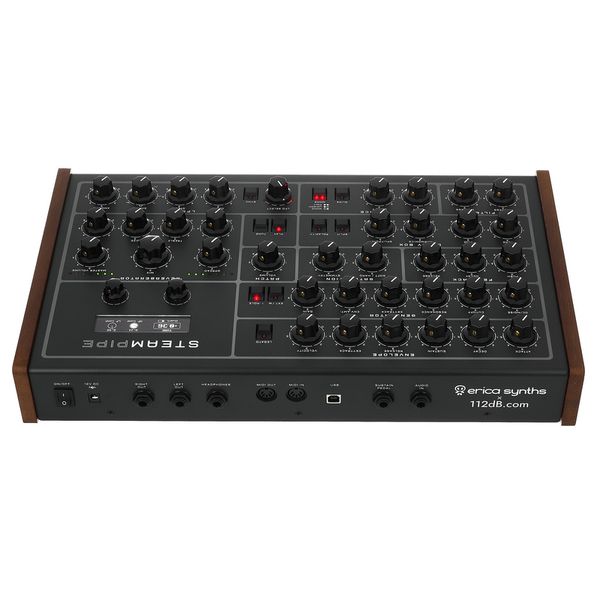
Connections:
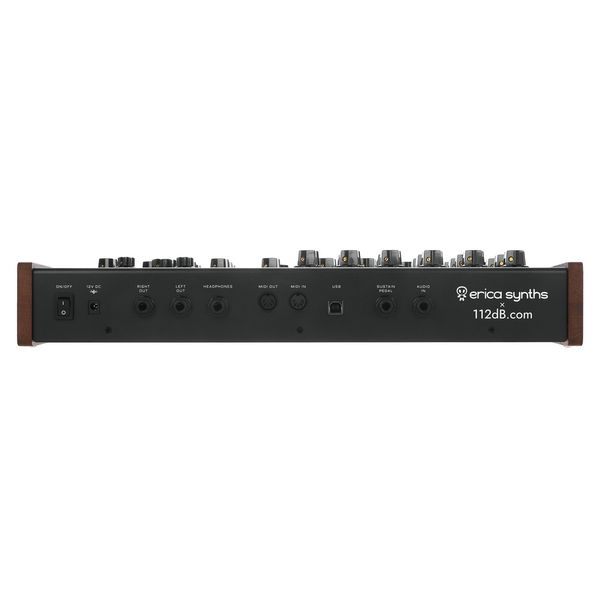
- One audio input: 6.3 mm jack
- One sustain pedal input: 6.3 mm jack
- Two line outputs: 6.3 mm jack
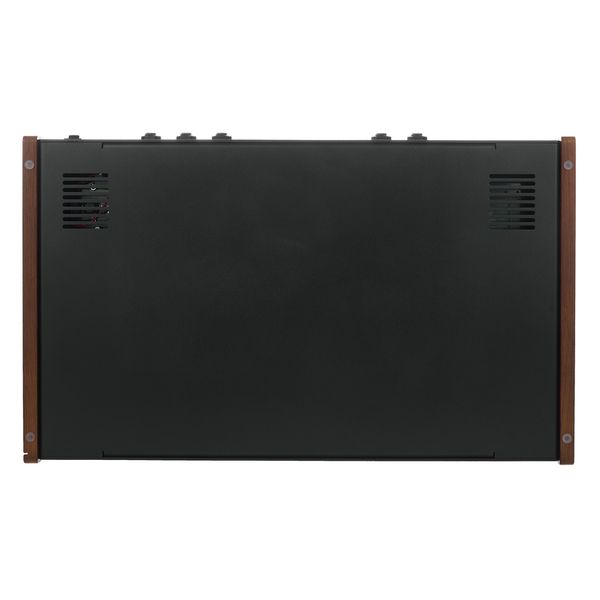
- One stereo headphone output: 6.3 mm jack
- One MIDI In: 5-pin DIN
- One MIDI Thru / Out: 5-pin DIN
- One USB type B
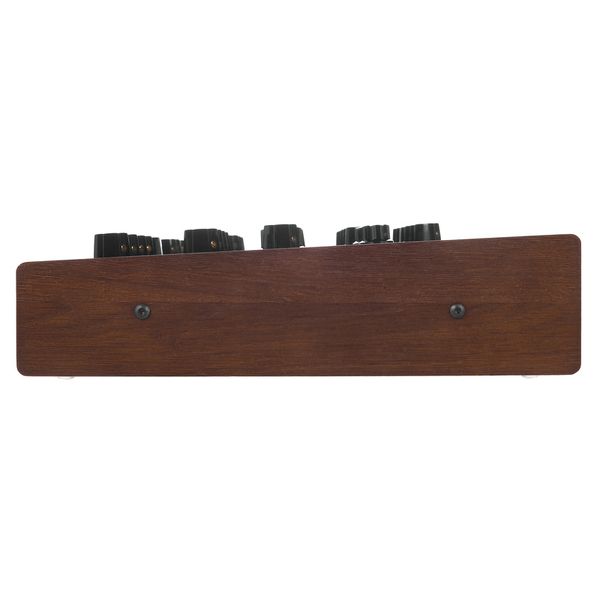
- Dimensions (W x D x H): 455 x 270 x 70 mm
- Weight: 3 kg
-
Available since December 2024
-
Item number 606226
-
Sales Unit 1 piece(s)
-
Design Desktop
-
Polyphony 8
-
Sound Generation Modeling
-
MIDI interface 1x In, 1x Out/Thru
-
Storage Medium Internal
-
USB-port Yes
-
Effects Yes
-
Arpeggiator No
-
Number of Analog Outputs 4
-
Digital Output No
-
Display Yes
-
Optional Expansions N/A
-
Special Features Modulation matrix with MIDI controller specific configurations
-
Physical modelling made easy
Erica Synths Steampipe is an eight-voice polyphonic synthesizer based on physical modelling synthesis. While it primarily simulates wind, string, and percussion instruments, it excels at producing sounds far beyond the conventional. From playable acoustic-like tones to complex, futuristic textures, Steampipe offers an extraordinary sound palette – and one that's surprisingly intuitive to access. Designed in collaboration with Dutch developers 112dB, Steampipe features a focused and musical parameter set, onboard presets, MPE compatibility, and a highly playable interface that makes physical modelling synthesis as immediate as subtractive. With few direct hardware competitors, Steampipe currently stands as a rare example of a polyphonic physical modelling synthesizer in standalone format.

)
Intuitive hands-on control
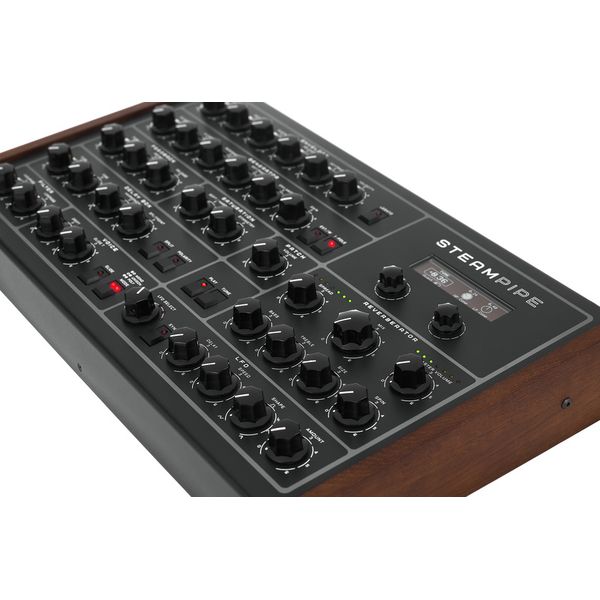
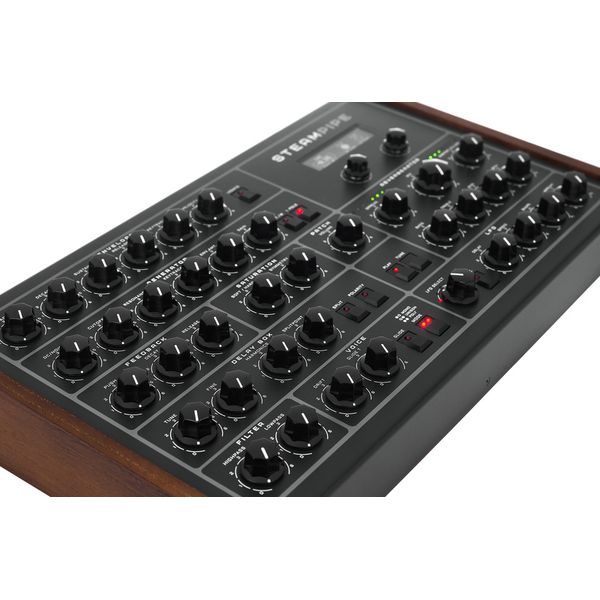
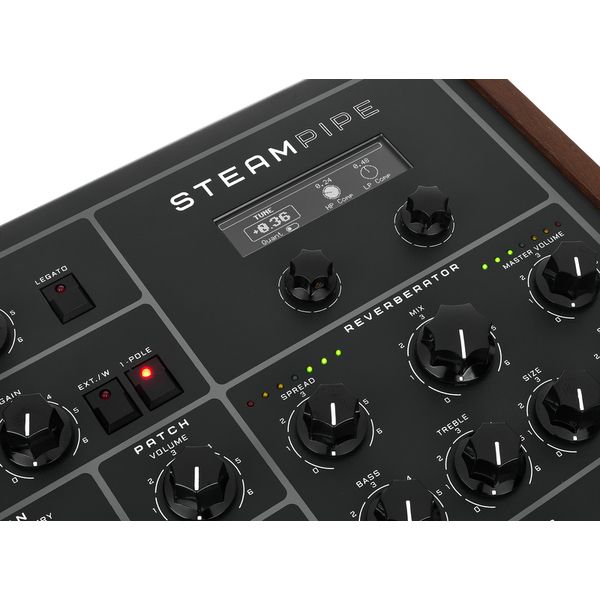
The Steampipe's unique signal path is based on a dual-stage "Steam" and "Pipe" architecture. The "Steam" section acts as the exciter, producing raw sound material from white noise and DC signals, which is then shaped by a dedicated envelope and low-pass filter. This signal is passed to the "Pipe" section, where a tuned delay line with extensive feedback emulates the resonating body of an instrument. Here, a saturator, high- and low-pass filters, and a harmonics shaper with Splitpoint and Polarity controls allow for expressive, nuanced sound sculpting. A dedicated Feedback envelope and push control add dynamics, while the final signal passes through a richly voiced reverb circuit with stereo spread and size parameters – nicely complementing the instrument's physical character. All parameters are easily accessible via a crisp, high-resolution display, and sounds can be saved and recalled from 192 user preset slots.
)
For expressive performers and sonic explorers
Despite its novel approach, Steampipe is extremely playable and well suited to both experimental and performance contexts. Its streamlined panel layout, clear parameter set, and responsive controls ensure quick, expressive sound design. With full MPE and MIDI CC implementation, it's ideal for players using expressive controllers such as wind controllers, the Haken Continuum, or Expressive E's Touché. Thanks to its high dynamic range and subtle response curves, Steampipe shines in live performance – particularly for musicians looking to add acoustic expressivity to an electronic setup. Its robust metal housing and premium controls continue Erica Synths' tradition of durable, tour-ready instruments.
)
About Erica Synths
Founded in Riga in 2014 by Girts Ozolins, Erica Synths has quickly made a name for itself as a major player in the modular sector. Thanks to its close cooperation with musicians from the EDM scene, the company's modules and devices stand out for their musicality as well as their ease of use. The manufacturer markets several series of Eurorack modules, each tailored to different applications. The Fusion series is based on tube circuits; the Pico series consists of space-saving 3-TE modules; the Black series combines high-quality analogue and digital modules; whilst the Drum series can be assembled into a modular drum machine. At the same time, the range of performance-oriented stand-alone effect units and synthesizers is gradually being expanded.
Endless sound design potential
The Erica Synths Steampipe's versatility makes it suitable for everything from melodic lines to cinematic atmospheres. With eight voices and selectable mono, unison, or poly modes, it can produce intricate textures, bell-like tones, or richly modulated pads. The external audio input replaces the exciter with an envelope follower and lets the resonator be excited by vocals, contact mics, or any modular source – enabling vocoder-style processing, re-synthesis and more. The tuning system includes a gyroscopic tuner and filter trimmers, ensuring harmonic control even in unpredictable sonic territory. Whether used as a primary instrument or as a sound-design layer within a broader setup, Steampipe will expand the sonic vocabulary of any production or performance environment.
In the spotlight
Physical Modelling
Physical modelling synthesis doesn't rely on oscillators or samples. Instead, it recreates the acoustic principles behind how real instruments produce sound – from breath pressure in a wind instrument to the struck surface of a drum. In Steampipe, this begins with the exciter signal (Steam), which stimulates the tuned delay line (Pipe) into resonant motion. Like a Karplus-Strong algorithm, the resulting feedback creates a tone that is then shaped through filters, saturation, harmonic emphasis, and reverb. Key parameters such as Harmonics, Splitpoint, and Feedback shape the interaction between exciter and resonator, resulting in vivid, organic, and highly responsive sounds. Non-linearity and feedback interdependence mean that small tweaks can produce dramatic tonal changes. With extensive modulation, fine control, and a performance-oriented interface, the Erika Synths Steampipe brings the abstract concept of physical modelling into the realm of intuitive musicmaking.
)