


Shure Beta 56 A

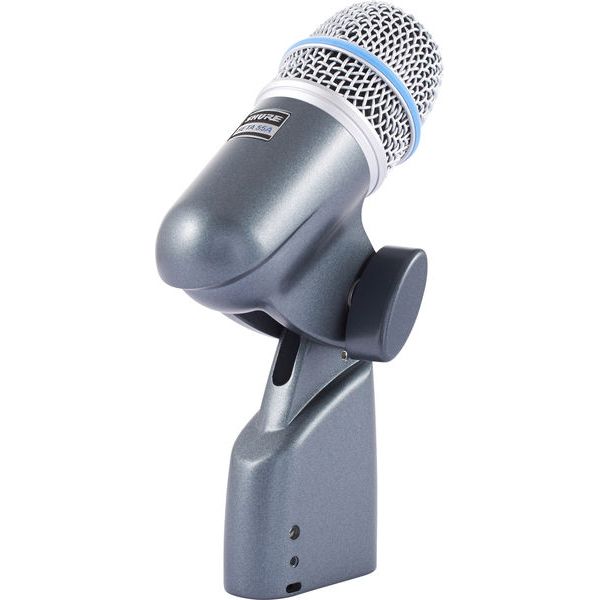
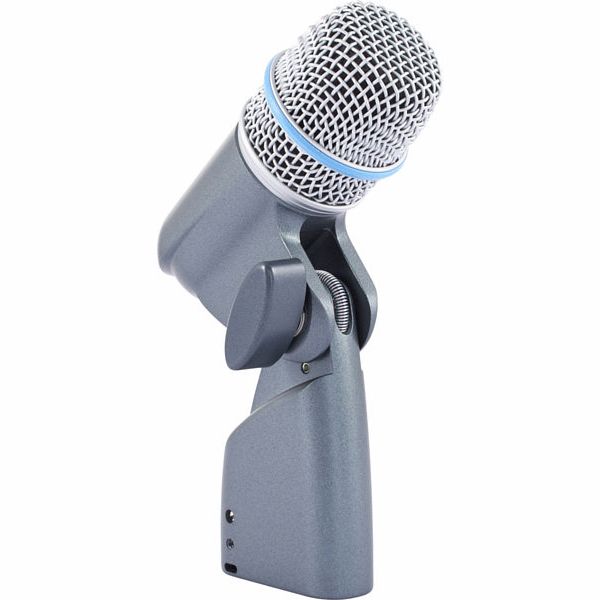
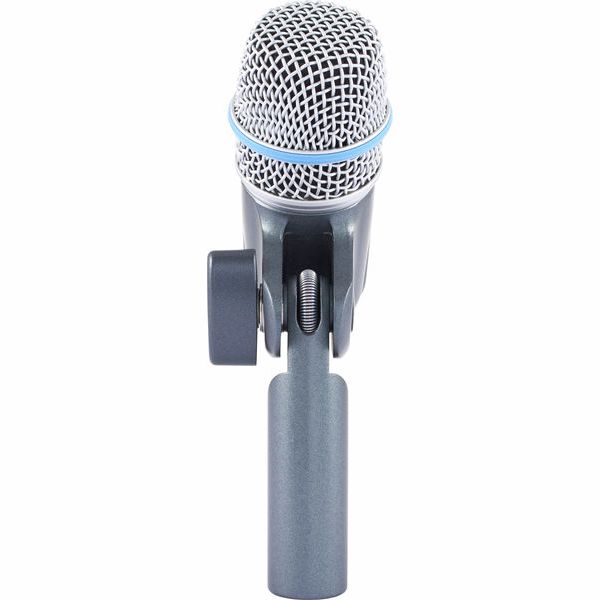
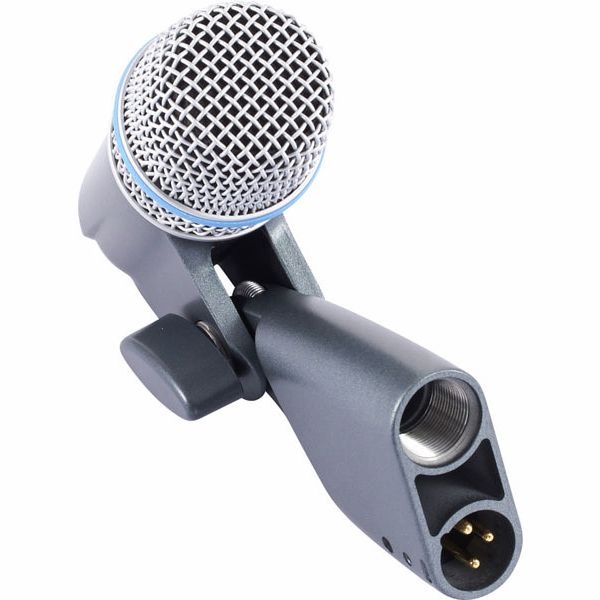
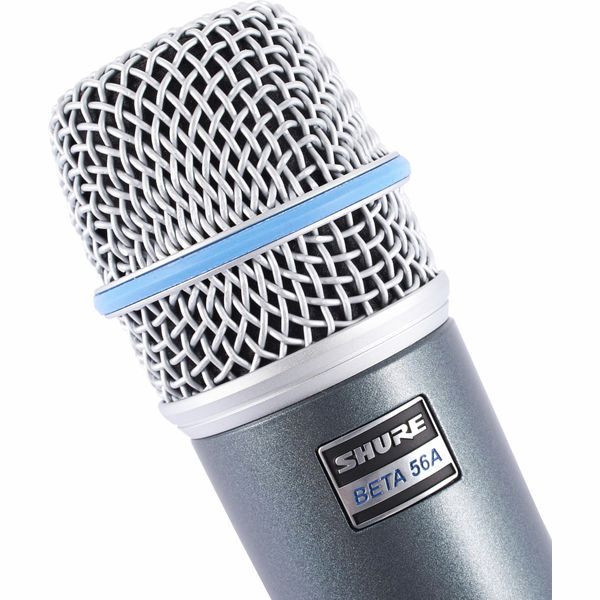
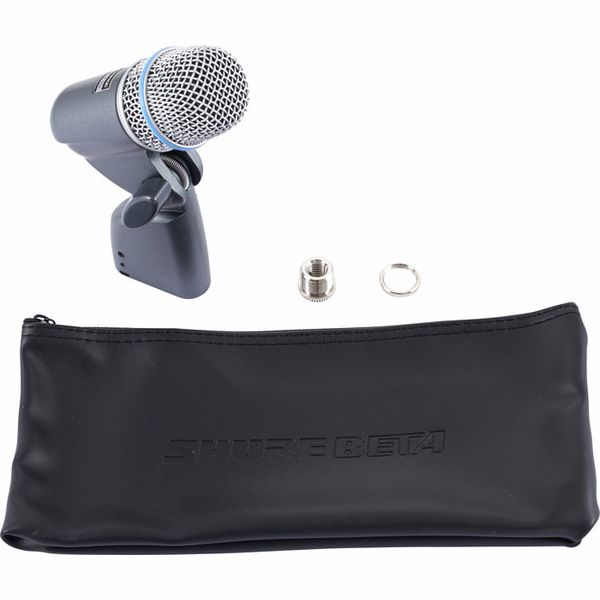


Dynamic Instrument Microphone
- Polar pattern: Supercardioid
- Perfect for miking instruments, e.g. toms, snare drums and percussion
- Integrated, adjustable tripod adapter
- With an integrated XLR connector for easy installation and maximum flexibility
- Uniform supercardioid polar pattern for high resistance to feedback whilst providing the highest possible gain and maximum reduction of background noises
- The compact design saves space on stage
- Mesh head made of hardened steel to reduce wear and tear
- Neodymium magnet for high output levels with minimal noise
- Pneumatic shock mount reduces handling noise and vibrations
- Frequency range: 50 - 16,000 Hz
- Output impedance: 150 ohm
- Open circuit sensitivity: -51 dBV/Pa (2.8 mV)
- Weight: 468 g
- Included pouch
-
Item number 105761
-
Sales Unit 1 piece(s)
-
Clip-On Microphone No
-
Condenser Microphone No
-
Polar Pattern Supercardioid
-
Microphone Clamp Yes
-
Dynamic Microphone Yes
-

Dynamic mic for drums and instruments
The Shure Beta 56A is a supercardioid dynamic microphone designed for close-miking drums – and is equally capable on percussion, guitar cabs, brass, and woodwinds in live and studio environments. Part of Shure's long-established SM and Beta microphone families, it reflects the company's longstanding philosophy of developing purpose-built microphones for every stage and studio application. A neodymium magnet provides higher output and sensitivity than standard dynamic designs, while the advanced pneumatic shock mount isolates the capsule from mechanical vibration and handling noise. The integrated swivel mount locks securely and stays put even if struck by a drumstick, with a built‑in XLR connector that simplifies cable runs. The hardened steel mesh grille survives stick hits that would dent a lesser mic, and the enamel‑coated die‑cast metal body handles the physical demands of touring. A storage bag and thread adapter are included as standard; no phantom power is required.

)
Tailored frequency response
The Shure Beta 56A's frequency response is largely flat from 200Hz to 8kHz – an unusually neutral foundation for a dynamic instrument mic, and as such it requires less corrective EQ than more aggressively voiced designs. Three modest presence peaks at 4kHz, 7kHz, and 10kHz add definition and articulation without harshness, bringing out stick attack on toms, the crack of a snare, and clear brass and woodwinds. Above 10kHz the response rolls off significantly, keeping the focus on the frequency range that matters most for close-miked instruments rather than chasing extended high-frequency detail. At close range, proximity effect adds substantial low-end weight – around +10dB at 25mm – which translates into genuine punch and body on toms when the mic is worked close; pulling back produces a more balanced, open tone.
)
From toms to trumpets
The Beta 56A is the natural choice for drummers and engineers who need a compact, versatile dynamic that moves between toms, brass, and guitar cabs without changing character. On toms, the supercardioid pattern's tight pickup angle and uniform off-axis response keep bleed from adjacent drums, cymbals, and stage sources to a minimum. Beyond the drum kit, the flat midrange and controlled presence lift work naturally with live saxophones, trumpets, trombones, and clarinets – all benefit from the same combination of proximity effect control and upper‑midrange definition. Guitar and bass amplifiers round out the application range, where the neutral midrange captures cabinet character without imposing its own colouration. The supercardioid pattern demands more careful placement than a cardioid, but the locking mount makes that adjustment repeatable – a trade‑off that pays dividends in reduced bleed and consistent results.
)
)
About Shure
The American company Shure began developing microphones during the early 1930s and is one of the pioneers of the audio engineering sector. Models such as the 55 Unidyne – known to many as the "Elvis microphone" – and the SM57 and SM58 which appeared in the mid-1960s are still ubiquitous in live sound production today. They enjoy cult status among musicians and technicians alike. In the 1990s, Shure introduced the first wireless microphones and in-ear monitoring systems and became a market leader in this field. In addition to microphones, Shure offers a wide range of earphones and headphones for studio and live use, as well as various accessories.
On and off the kit
The Beta 56A's compact body and integrated locking mount give it a practical advantage over a conventional clip-and-stand arrangement on a crowded kit – it fits between drums and cymbal stands where an SM57 on a separate clip would struggle for space, and the active locking system keeps it in position through the rigours of a full show. The pneumatic shock mount prevents stick vibrations and knocks from transmitting through the stand to the capsule. In the studio, the flat midrange and proximity effect give the engineer a predictable starting point that responds consistently to placement adjustments. For a complete drum mic setup, Shure's Beta 56A pairs naturally with the Beta 52A on kick drum – the two mics share the same design philosophy and tonal family, covering the full kit from sub-bass to high-frequency attack.
This is what customers who viewed this product bought

Accessories & matching items
Compare options
-
Shure Amp Microphones at a glance
-
Display Amp Microphones from AED 140 - AED 180
-
Go to product group Microphones for Trumpet, Horn ETC
-
Go to product group Microphones for Saxophone
-
Go to product group Amp Microphones
-
Go to product group Microphones for Toms
-
Go to product group Microphones for Snare Drum
-
Go to product group Instrument Microphones
-
Go to product group Microphones
-
Show manufacturer details for Shure
-
Shure Microphones at a glance