


Shure KSM 9 CG

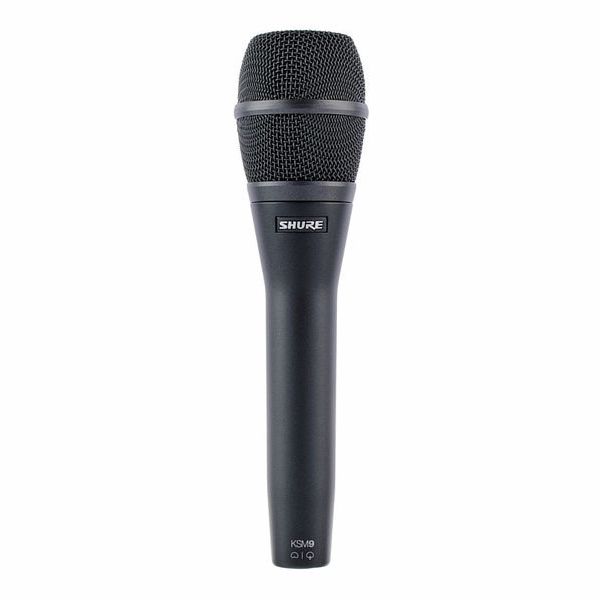
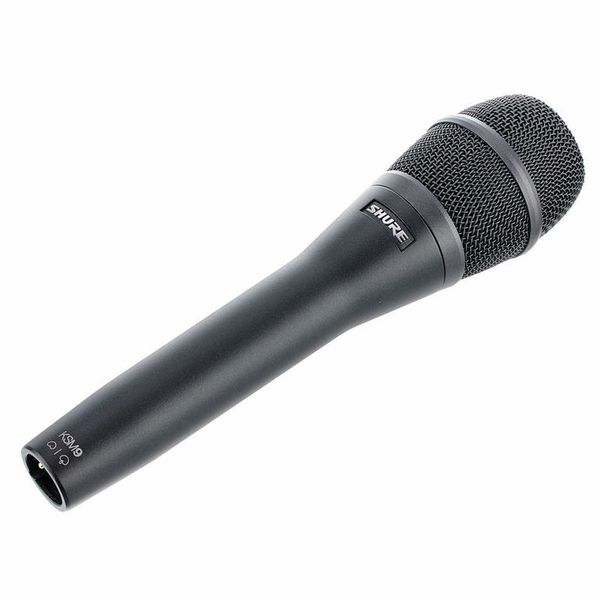
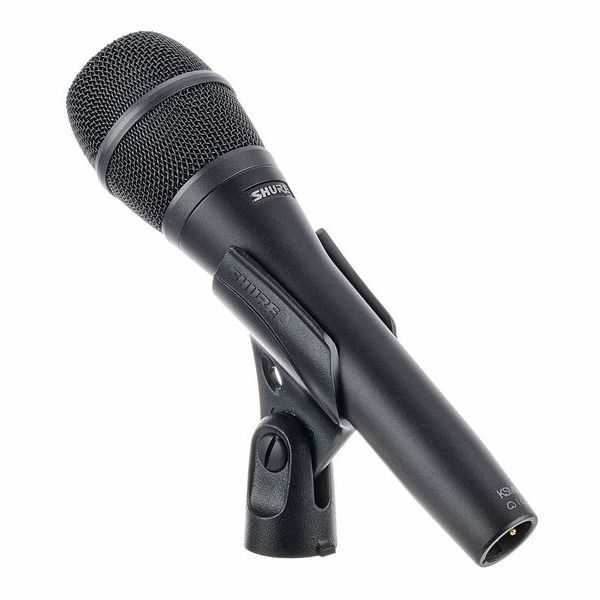
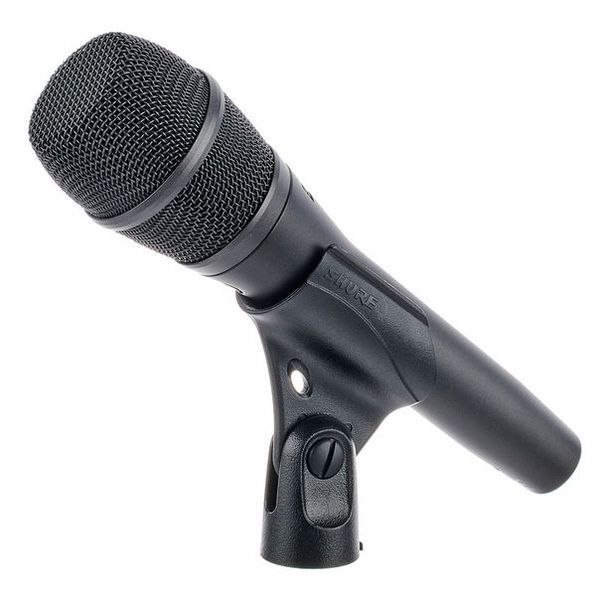


High-end Condenser Vocal Microphone
- Designed for live performance
- Dual diaphragm
- Switchable supercardioid/cardioid polar patterns
- Frequency response: 50 - 20.000 Hz
- Sensitivity: -51 dBV/Pa / 2.81 mV/Pa
- Maximum SPL: 94 dB SPL - 152 dB max.
- Die-cast metal housing
- Minimal handling noise
- Great feedback rejection
- Triple pop filter
- Colour: Anthracite
- Weight: 300 g
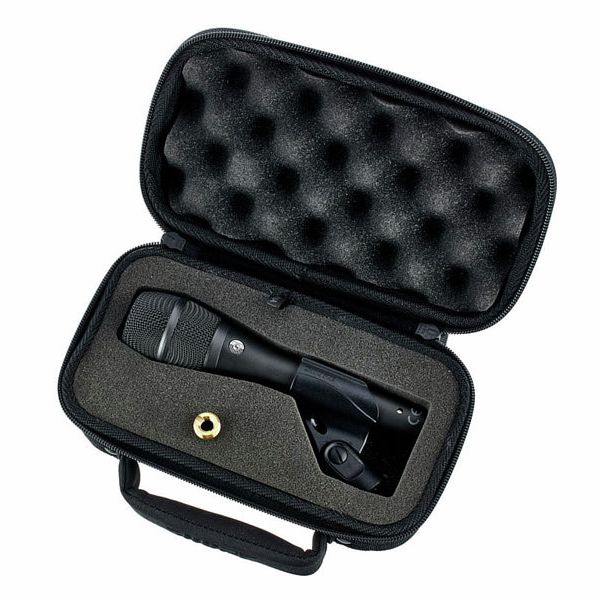
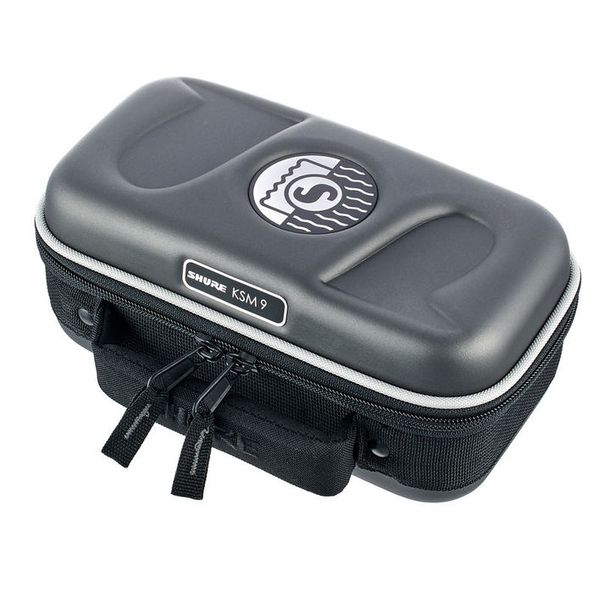
- Incl. Case
-
Available since May 2006
-
Item number 194364
-
Sales Unit 1 piece(s)
-
On/Off Switch No
-
Polar Pattern Cardioid, Supercardioid
-
Colour Gray
-
Lo Cut No
-
Pad No
-
Diameter 49
-
Length 191
-
Weight 300 g
-
Frequency range from 50 Hz
-
Frequency range to 20 kHz
-
Microphone Mount Yes
-
Bag Yes
-
Optional windscreen available 165665
-
Condenser performance on stage
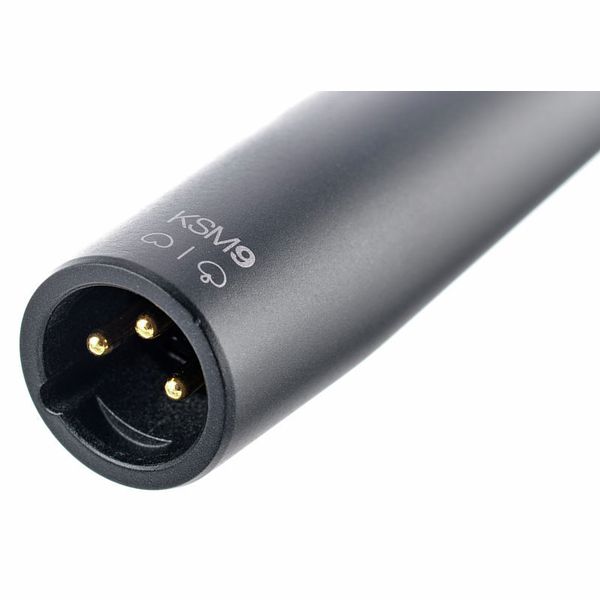
The Shure KSM9 is a premium dual-diaphragm condenser vocal microphone designed for live performance, combining the extended frequency response and transient detail of a condenser with the practical flexibility of switchable polar patterns. Two 3/4" gold-layered low-mass Mylar diaphragms work with a Class A discrete transformerless preamplifier to deliver high headroom, low self-noise, and excellent transient response, with a maximum SPL of 152dB – enough for close-miked vocals at stage performance levels. The frequency response extends from 50Hz to 20kHz, with a naturally rolled-off low end and a gentle upper-midrange lift that helps the vocal cut through a dense mix without sounding forced. A pattern switch selects either cardioid or supercardioid operation; an advanced suspension shock mount minimises handling noise. A zippered carrying case and stand adapter are included; 48V phantom power is required.

)
Two patterns, one microphone
The KSM9 is aimed at vocalists and engineers who need condenser-quality detail and pattern flexibility in a robust live performance package. In cardioid mode, the wider pickup angle provides a natural balance between freedom of movement and good gain before feedback. Switching to supercardioid narrows the pickup pattern for greater isolation on louder or more crowded stages. The reduced proximity effect makes the microphone more forgiving of changing technique and working distance – a meaningful advantage for expressive performers who work the microphone rather than staying at a fixed distance. Engineers stepping up from the similarly forgiving KSM8 will gain extended high-frequency response and pattern flexibility, while those seeking the highest level of vocal transparency will find the KSM11 at the top of Shure's live vocal range.
)
High-class condenser
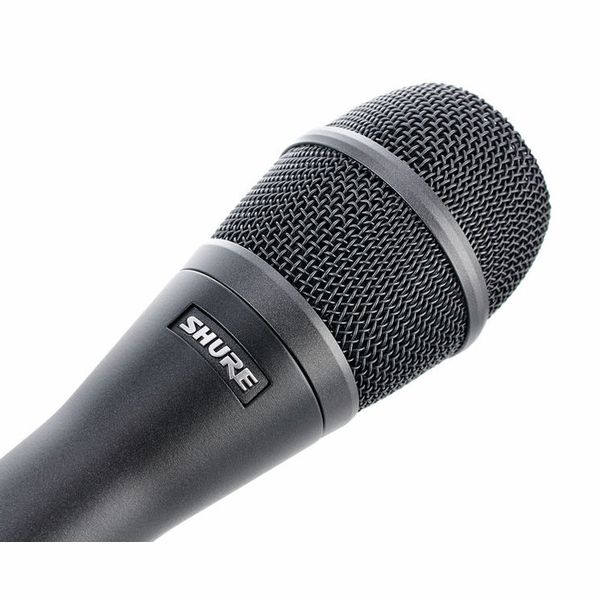
The Shure KSM9's dual 3/4" gold-layered diaphragms work in combination to control the proximity effect – the low-frequency buildup that causes tonal changes as a vocalist moves closer to or further from the microphone. The result is a more consistent vocal sound across a wider working range than a single-diaphragm condenser, reducing the need for corrective low-frequency EQ at the desk. The Class A discrete transformerless preamplifier preserves fast transients while keeping harmonic and intermodulation distortion to a minimum. Gold-plated internal and external connectors preserve signal integrity throughout the audio path. A permanent subsonic filter attenuates frequencies below 17Hz, eliminating mechanical rumble before it reaches the preamplifier, while the three-stage grille effectively controls plosives, moisture, and breath noise.
)
)
About Shure
The American company Shure began developing microphones during the early 1930s and is one of the pioneers of the audio engineering sector. Models such as the 55 Unidyne – known to many as the "Elvis microphone" – and the SM57 and SM58 which appeared in the mid-1960s are still ubiquitous in live sound production today. They enjoy cult status among musicians and technicians alike. In the 1990s, Shure introduced the first wireless microphones and in-ear monitoring systems and became a market leader in this field. In addition to microphones, Shure offers a wide range of earphones and headphones for studio and live use, as well as various accessories.
Stage-ready, show after show
In practice, the Shure KSM9 keeps vocal channels predictable even when stage conditions become demanding. The controlled proximity effect and consistent polar response across the frequency range mean that tonal and level variations are smaller than with a conventional dynamic or single-diaphragm condenser, reducing gain riding and corrective EQ at the FOH desk. The tighter supercardioid pattern provides additional off-axis rejection on particularly loud stages, where greater isolation from adjacent sources is required. The advanced suspension shock mount reduces handling noise, even during the most energetic sets, while the three-stage grille keeps moisture, plosives, and the occasional knock under control. At 300g, the KSM9 has the build quality expected of a touring vocal microphone while remaining comfortable throughout extended performances.