


Behringer RX1202FX V2

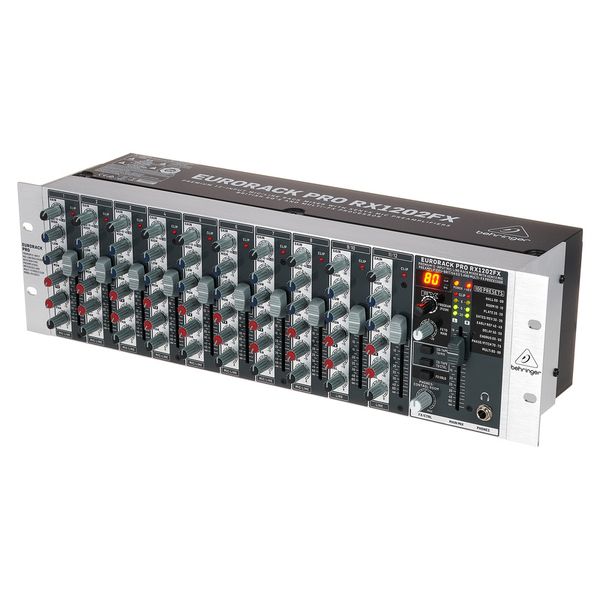
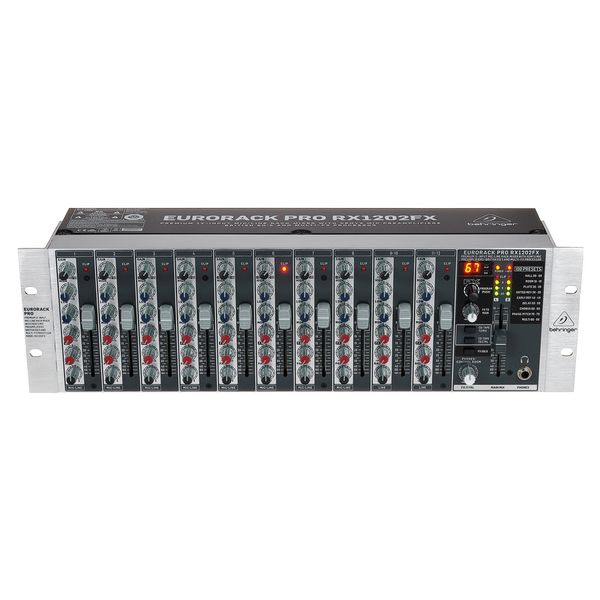
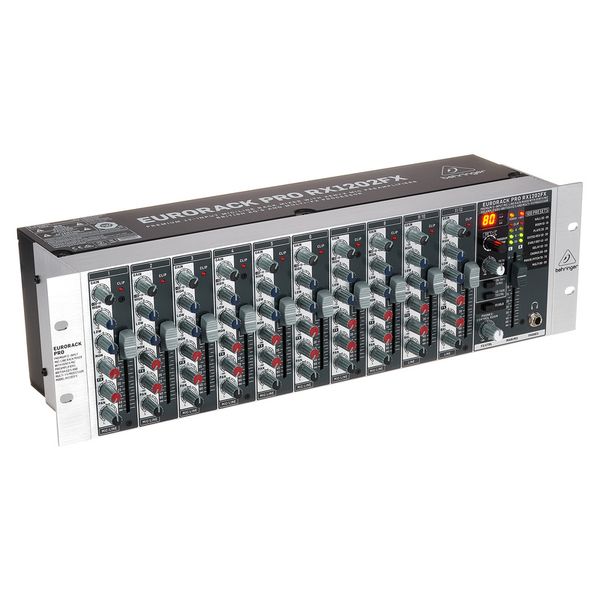
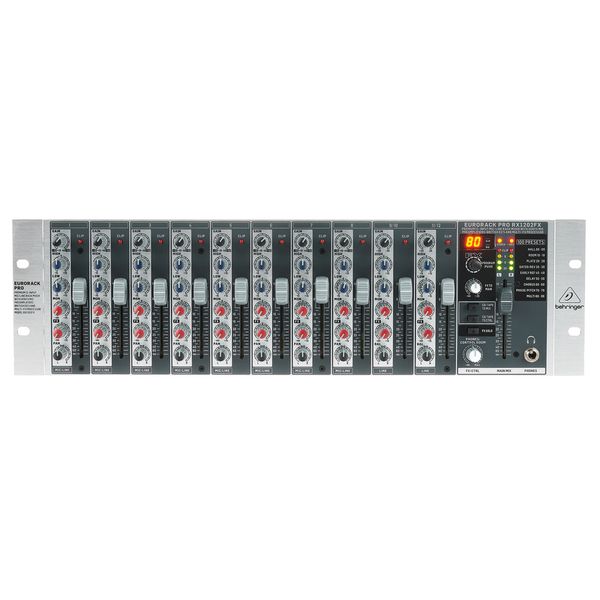
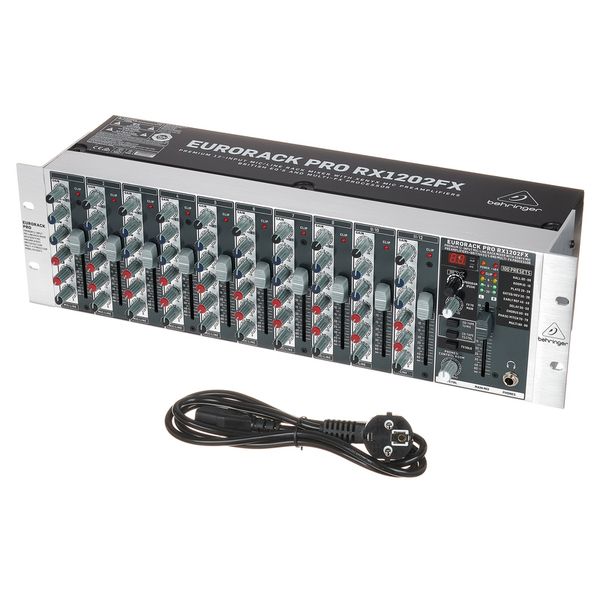


12-Channel Rack Mixer
- 8 XLR inputs
- 2 Stereo inputs (jack)
- 2-Band EQ and Clip LED per channel
- 1 Monitor path
- 24-Bit effects processor with 100 presets
- Headphone and control room output
- Tape in/out (RCA)
- 48V Phantom power
- 60mm fader per channel and master
- Dimensions (H x W x D): 133 x 482 x 150 mm
- 19" Rack mount with 3U
-
Available since June 2006
-
Item number 194677
-
Sales Unit 1 piece(s)
-
Parallel usable Channels 10
-
Mic Ins 8
-
Stereo Ins 2
-
Master Out XLR
-
Number of Pre Aux max. 1
-
PC Interface No
-
Multitrack Recording No
-
USB/SD Direct Record No
-
PFL No
-
Effect Processor 1
-
USB Play No
-
Bluetooth Play No
-
Foot Switch No
-
Matrix Mixer No
-
Zones 0
-
19" Rackmount Yes
-
Height 133 mm
-
Width 482 mm
-
Depth 150 mm
-
Weight 3 kg
-
simultaneously used channels 10
-
Mic-In 8
-
Mono Line Ins 8
-
Mono Line-in 8
-
Stereo-In 2
-
Hi-Z Input 0
-
Phantom Power 48 V
-
Aux Ways 2
-
Pre Aux max. 1
-
PC-Interface No
-
Audio Interface Input 0
-
Audio Interface Output 0
-
Rec Out (Analog) Yes
-
Insert Yes
-
Panorama Yes
-
Racklight Connector No
-
Lamp Connector No
-
Foot switch No
-
Rackmount Yes
-
Case Thomann No
-
Case Thon No
-
Bag No
-
HE Units 3 U
-

A compact mixer for rack applications
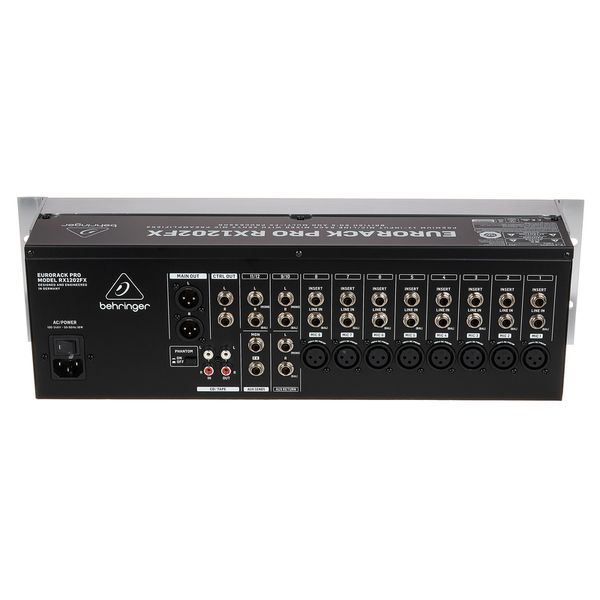
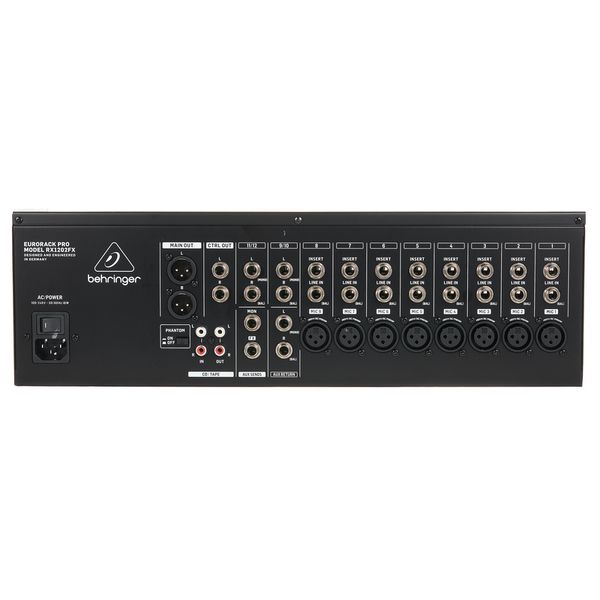
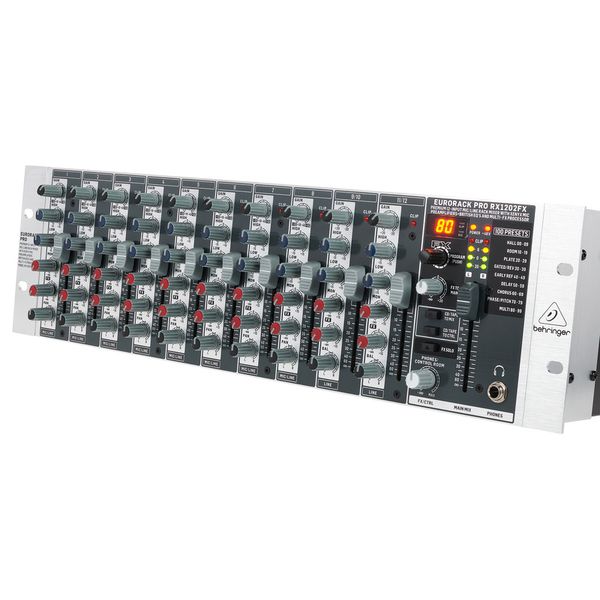
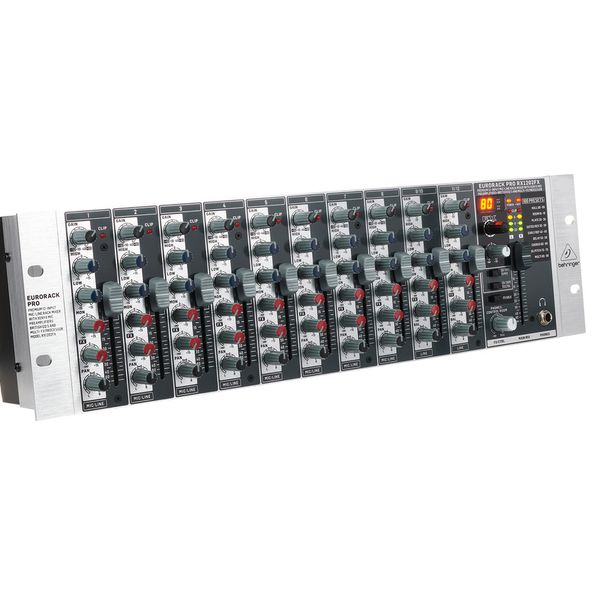
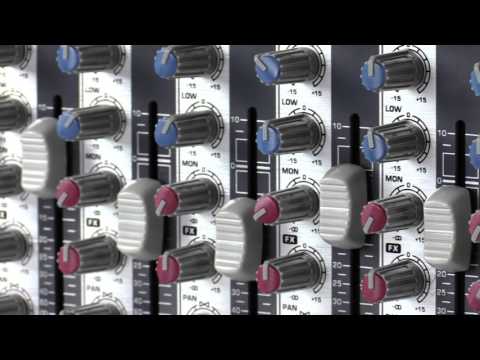
The Behringer RX 1202 FX V2 is a mixer that has been designed for installation in 19" racks and offers twelve channels for mixing. The rear panel houses eight XLR inputs and two line inputs, an AUX return, and a CD/tape input – all of which are in stereo. In terms of outputs, there is a main XLR output, a control output via two 6.3mm jacks, and a CD/tape output that, like the corresponding input, is in RCA (cinch) format. Each channel strip includes a fader and six knobs: Gain, two-band EQ, and monitor and FX sends as well as controls for pan (for channels 1 to 8) and balance (on channels 9/10 and 11/12), while the overall volume is governed by a master fader. Finally, the RX1202FX V2's built-in effects processor lets the user add polish with options like reverb, delay, chorus, flanger, and pitch shifting. All of these features combined make the RX 1202 FX V2 a versatile choice for a wide range of applications.
)
Always be in control
As mentioned above, the Behringer RX 1202 FX V2 features its own effects processor, which boasts 24-bit quality as well as 100 presets and thus gives users an immense choice in terms of effects. These can be selected via the FX dial, and an LED indicator for the signal level allows the processor to be safely protected against overloads. A knob for adjusting the effect level is in turn located below this control, as is the FX Solo button, which lets the user listen to only the effect signal. The adjacent "CD/Tape To CTRL" button can be used to route the signal from the corresponding input (for which the sockets are located on the rear panel) to the monitoring output, allowing a soundcard to be connected and the tracks to be recorded to a DAW with simultaneous playback. Finally the "CD/Tape To Mix" function provides an additional input for signal sources such as tape machines or CD/MP3 players.
)
Mixing for entire rigs and whole bands
The Behringer RX 1202 FX V2 is a great solution both for the studio and for live applications, in the former of which it is perfect for mixing signals from different tracking rooms. In the live environment, on the other hand, this 12-track mixer will provide guitarists and keyboard players using rackmount gear an excellent way to create a single signal from multiple sources, in addition to which the RX 1202 FX V2 can be used to mix entire bands or conferences involving multiple speakers. The mixer's rear panel features a stereo main output in XLR format that allows the signal to be routed to a PA system, as well as a control output which can be used to send the signal to a DAW for simultaneous recording, meaning that even complete live shows can be recorded, for example. Thanks to its special design, the Behringer RX 1202 FX V2 can be effortlessly integrated into a 19" rack (requiring 3U in height), which means it can easily be taken on every tour.
)
About Behringer
The company, which was founded in Germany by Uli Behringer and now manufactures its products in China, has been known for affordable and great-value equipment since its very first product, the Studio Exciter F. An array of mixing consoles (such as the Eurodesk MX8000), signal processors, and later sound amplification and monitoring equipment, has made it possible for countless musicians to fit out their home studios, practice rooms, and mobile PAs within budget limits that were previously unthinkable. The acquisition of other companies, including Midas, Klark Teknik, and TC Electronic, meant that new product groups were added - and also resulted in the technical expertise of these companies being incorporated into product development.
High-quality, warm-sounding preamps
The Behringer RX 1202 FX V2's channel strips are equipped with equalisers that are based on those of classic British mixing desks of the 1960s and 1970s and give the signals a distinctive warmth, and the mixer additionally features eight Xenxy microphone preamps that deliver an outstandingly high-quality sound. 48V phantom power is available for each channel, so the RX 1202 FX V2 can additionally be used in conjunction with condenser microphones, and this feature can be activated via the button found to the right of the main power switch situated on the rear panel of the device. Each of the aforementioned channel strips is equipped with a red clipping LED, so the user will immediately know when to dial back the channel's gain control, as well as a dedicated PAN control to allow the signal to be positioned within the stereo image. The two stereo channels in turn have a balance control each.
This is what customers who viewed this product bought
Accessories & matching items
Compare options
-
Behringer Analogue mixers at a glance
-
Display Analogue mixers from AED 120 - AED 160
-
Go to product group 19'' Rack Mixers
-
Go to product group Analogue mixers
-
Go to product group PA Mixers
-
Go to product group PA Equipment
-
Show manufacturer details for Behringer
-
Behringer PA Equipment at a glance